Dust flux, Vostok ice core

Dust flux, Vostok ice core
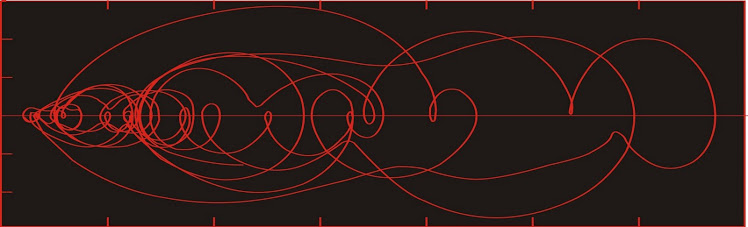
Two dimensional phase space reconstruction of dust flux from the Vostok core over the period 186-4 ka using the time derivative method. Dust flux on the x-axis, rate of change is on the y-axis. From Gipp (2001).
Showing posts with label unsophisticated investors. Show all posts

Sunday, February 9, 2014

Vindictus

I've been hearing stories lately from contacts in different junior explorecos about regulators questioning certain types of promotional literature.

In one company's case, the questions are driven by its inclusion of previously reported grades and tonnages of surrounding deposits in the same structural province. Now it is not clear to me whether the regulators are objecting because they are afraid that the casual reader will think that the neighbouring deposits belong to the company in question (it is clear they do not--the company has identified the owners/operators of the surrounding mines) or that they feel it is too promotional. I'm guessing the latter, in which case the fact that the grades/tonnages are already a matter of public record seems to render the problem moot.

How does excluding such information from the presentation help the retail investor? It doesn't. It is information which is potentially useful to the investor. In its absence, the retail investor will have less of an understanding of the area's potential than other, more sophisticated investors, who are capable of looking up such information themselves.

But perhaps that is the point. It is not yet time for the retail investor to enter the picture. Now is the time for institutions to get positioned. By excluding information from the eyes of the retail investor, the institutions can get safely positioned at a lower price. After the big move, it will be time for the retail investor to enter the picture, so that institutions can exit their positions safely. But don't worry--they'll leave the last few percent of the major move for you.

Sunday, September 22, 2013

Why do Ma and Pa play in a rigged market?

“They have been able to pay off politicians with political campaign funds and have been granted informal and unspoken yet complete immunity from prosecution, setting the scene for even bigger confiscations of investor capital. With the risk of legal repercussions so small and the temptation to steal so large, why would any of them not take advantage? What do they have to do to stop people from entrusting them with their savings? Put up neon signs that say, “We steal your money”?”
                                        – Dimitri Orlov – The Five Stages of Collapse

Sometimes even that doesn't help.


"Darn it, Pa! I told ya not ta buy AAPL on margin!"
"But Ma, I thought you wuz talkin' 'bout apples."

The problem is that Ma and Pa believe they are above average--in intellect, in wisdom, in luck, in investing acumen. When they see that sign that says their money will be stolen, they all have faith that it will happen to somebody else.

When I was a kid, I wanted to be a pool shark. Never mind that I wasn't much good at it. I researched the concept at the local magazine stand and discovered that the secret was not to beat the other guy with great shooting, but to beat him in a way that he would think he had beat himself, through mistakes. The reason it works is because when your victim makes a good shot, he believes that is his normal capability, but a mistake is not--and tends to be discounted. That discounting is essential, because if your victim believes he only lost because of his own mistakes, he will be confident he will win the next time. On the other hand, if you simply run the table, chances are he won't play again.

This only works because people are usually not as clever as they think they are.

Consequently, Ma and Pa can read about what is being done to them--and they will think it is only a problem for other people. Their orders will get filled in a timely fashion. The stocks they buy have true liquidity--not the phantom liquidity of offers that are never to be filled. And when they file for bankruptcy, it will merely have been bad luck.

Thursday, August 19, 2010

How the game is played, part 2; Why your broker can't get you in on that sweet private placement.

Today we look at yet another technique through which the sophisticated money picks the pockets of the unsophisticated. This one is a little worse than last time, because this time the sophisticated money is someone owing a fiduciary responsibility to the unsophisticated money.

The lesson today comes courtesy of the Toronto Stock Exchange. Go to the tsx website. Find the section that lists the largest short positions. I've placed the link here for you, but I find it by typing in "short positions" in to the search TMX.COM box. Now click on the report posted on March 18 ("Top 20 Largest Consolidated Short Position Report - March 15, 2010").

Yes, I could have sent you directly there, but I want you to have confidence that this data really exists and is not simply something I have made up.

The third entry on the list is Dundee Precious Metals (DPM). [Again, for disclosure, I have no position in DPM, either long or short]. We notice that the short position increased quite a bit during the reporting period, which is from February 28 to March 15. On February 28, the short position was 1,558,760 shares, and on March 15 the short position was 21,634,118 shares, for a net change of 20,075,358 shares.

Wow! A lot of people suddenly decided they didn't like this stock.

Still on the TMX website, get a quote on DPM. From the quote page, click on the price history tab, and then enter a date just after March 15, 2010 so you can see all trades over a 30-day period. We are interested in the trading that took place between February 28, 2010 and March 15, 2010. If you add up all the trades, you see that there were less than six million shares traded over that period.

Well WTF?! How do you increase the short position in a stock by 20 million when only 5 million trades take place?

Here's a game that some brokers play. Stock ABC announces good results, and a lot of buying comes in, so the price jumps. You call your broker, and tell him you want to buy 5,000 shares (let's say) of ABC. The broker says sure, gives you a quote, you send in the money.

Now your broker has been around a few years, and he has seen all this before. He knows that the price of ABC is going to fall soon, so he takes your money but doesn't exercise the trade. He scratches out an IOU for the back office so that any future statements in your account will reflect the presence of these shares. But no trade has occurred. Your broker believes that ABC will fall later, and he will buy the shares later at a lower price, put them into your account, and make some extra money for the brokerage. Is this acting in your best interest? Is this fulfilling his fiduciary duty to you?

In acting in this way, your broker creates a type of "synthetic short position". You are owed shares, yet no official share transaction has taken place. You would have no way of knowing that this is happening unless you call for delivery of your share certificates, because your brokerage statements will state that the shares are being held for you even though at this moment they are not.

This is fraud.

Virtually all the time, things work out for the brokers. ABC falls in price, the brokerage makes some extra money. Once in awhile the opposite may happen, and the broker is forced to buy at a higher price and takes a slight loss.

What happens if ABC now hits an enormous company-making hole and the stock rockets up by multiples? And what if the broker has not only done this in your account, but in a whole pile of client accounts, some of which may be owed a very large number of shares of ABC. It is possible that the brokerage may go bankrupt and you may not recover much of what you are owed. And the whole thing will probably be treated as an accident.

But it was fraud.

How might the brokerages protect themselves against a sudden rapid rise in the price of ABC?

Let's look at Dundee again. Go back to the quote, and this time click on the News tab. We are interested in news releases of the company this time. And we note that on February 22, 2010, DPM announced a bought-deal financing of 20 million units at $3.30. On that day, the share volume was rather high, and the price fell to basically the offering price.

Perhaps it is only one of those coincidences that the size of the offering happens to be the amount by which the short position grew by mysterious means over the three weeks until the offering closed on March 15. Or maybe it was one of those coincidences.

In this case it means that the brokerages sold the soon-to-be-issued shares to their clients. Which seems reasonable, as there were no warrants, and there are not reported to have been any brokers warrants offered to the brokerages, and the sales between February 22 (when the deal was announced) and March 15 (when the deal was closed) were all near the offering price; so the brokers did not overtly scam their clients.

The brokers did, however, put their clients at risk. The clients must have been sold undeliverable (by virtue of being nonexistent) shares. In a traditional offering, the clients' money would have been held in escrow until the offering closed--the money would be passed on to the company only when the shares were issued, and no short position would have been created. If for some reason the financing fell through, the money would be returned to the clients and they would lose nothing except an opportunity cost for the two weeks or thereabouts their money remained in the hands of the escrow agent.

But for things to work this way, the brokerages would need to find qualified investors willing to buy 20 million shares ("qualified" investors are sometimes called "sophisticated investors"--you are automatically considered sophisticated if you have more than a certain amount of liquid assets, or your annual salary exceeds an arbitrary amount--thus a wealthy orphan is a sophisticated investor, but you, who have been trading shares for twenty years, are not).

For the bought deal, the brokerages buy the shares, but in this case they pre-sell them to any and all of their clients, many of whom would not qualify as "sophisticated investors". Now what would happen if the deal is announced, the clients try to buy in but are filled with the nonexistent shares (creating the 20 million share synthetic short position) and then for some reason the deal doesn't happen? Suddenly all these clients are owed shares, and the scramble to cover could lead to an extreme market dislocation.

Once again--in this particular case, it would be unfair to call this a scam. But the electronic trail left suggests that the brokers did put some risk on their clients without any apparent compensation, which seems to be a breach of fiduciary duty. Furthermore, the clients who took on this risk were probably not "sophisticated investors", otherwise why not simply have them participate in a financing?

It is easy to see how the process can be used unfairly.

You call your broker because you've heard about this financing by ABC, in which units consisting of a share and half a warrant are being offered. You want in, but your broker tells you the offering is oversubscribed, too bad, but advises you it is so hot you should just buy shares, even though they are priced higher than the offering price. They could go higher still in the coming days because ABC is on a real tear, and with the financing complete they will advance . . .  blah, blah, blah.

You pay your money, your broker puts an IOU in your account and then later delivers shares from the financing to your account, skims a little extra profit, collects the warrants you should have had, and possibly some brokers warrants too. Not bad!

Thanks to Terry for doing the original legwork.

Next time we look at a simple game some brokers play.
Wednesday, August 18, 2010

How the game is played, part 1: Beware of stop losses

If money were stable and real interest rates were greater than zero, we would all keep our money in the bank. We might, once in awhile, invest a little money in the stock market, and the form of that investment would probably be a dividend-paying stock.

Unfortunately, none of the above are true, so we are forced to gamble with our life savings in the grand casino we call the stock market--our only alternative (unless you buy gold) is to watch the value of our money evaporate at the same rate irrespective of whether it sits in the bank or is stuffed under the mattress. And, like any other properly run casino, the game is rigged--or at least the rules are defined in such a way as to swing the odds heavily in favour of the House.

Today we will discuss one mechanism by which the House wins at the expense of its clients. In future entries we will look at least two others (more if I can find suitable examples).

Go to the TSX website. Get a quote on VTR (Volta Resources Inc.). In the interests of disclosure, I am long this stock, but otherwise have no involvement with them (but my long position is not as long as it should be for reasons that will be discussed in part 2).

Now click on the tab marked "Price History". You will see the price history of this stock for the last month. Scroll down below the table and you will see a little box labelled "History snapshot for Volta Resources Inc." Beneath it is a box. Enter the following date: 09/24/2009 and click the Get Quote button.

Here is what you should see:
Thursday, September 24, 2009
Closing Price:     0.405
Open:                0.450
High:                  0.460
Low:                  0.265
Volume:     3,142,884
Split Adjusted Price:     No splits
Adjustment Factor:     No splits

If you look at the previous two days you see that this stock underwent a tremendous move from $0.17 to about $0.45 in two days under heavy volume (about double the volume above). This was in response to an excellent news release.

Compared to the days before, and the days after, the trading on September 24, 2009 was really unusual. Both of the two previous days, the stock opened at or very close to the low of the day, rose through the day, and closed at or near the high. On the 25th, the stock traded within a small range as it fell from $0.42 to $0.39, trading only as low as $0.36.

But on the 24th, the stock opened at $0.45, rose to $0.46 until late morning when the price suddenly collapsed to $0.265. The collapse was on a relatively few trades with low volume, and there was a sudden cascade of 200,000 shares at $0.265 or $0.27, and then the stock rose rapidly on large volume back to $0.40.

Somebody was taught an expensive lesson.

What happened was this. Someone bought a lot of shares, probably at around $0.40 the day before, and they put a stop-loss on those shares, set at, say, $0.27. Now you and I cannot see that position, but there are people who can. There is usually a flurry of trading early in the morning, so the stalker waits until the activity grows quiet before making its move.

The stalker might place a bid just below the stop-loss (say $0.265). Then the stalker readies his computer, and fills all the existing bids down to the bid just below the stop-loss. That last transaction triggers the stop-loss, and the stalker is right on it picking up the stop-loss shares. Because VTR was thinly traded, the entire affair was stretched out over a couple of hours, but I can remember on several occasions in 2003 seeing the same thing happen with Couer d'Alene (CDE-N), and it was clear that all the bids were hit and the stop-loss triggered in less than a minute (Disclosure--no current position in CDE-N, long or short, although I was long in 2003). It would then take about fifteen minutes for the stock to return to (or near) the price before the quick takedown.

This is an example of how sophisticated money takes advantage of unsophisticated money.

In the medium to long term, seeing this type of activity is a bullish sign for the stock in question, as it means that sophisticated investors are picking the pockets of the unsophisticated in order to accumulate the stock cheaply. It is, however, a mark of the unfairness of the market (or at least the imbalance of information available to certain players at the expense of you and me).

There are a couple of lessons we can learn from this:

1) don't actually post your stop-losses. Keep them in your mind only (actually this isn't likely to be a problem until you are wealthy enough to buy positions large enough for this sort of character to take an interest) as Jim Sinclair has suggested;

2) It can be very useful to keep stink bids in 15-20% below the going price of a stock, especially a strong one. Your bid will get filled in the course of the takedown. Part of my current long position in VTR was obtained during a similar takedown (albeit at a higher price).