Dust flux, Vostok ice core

Dust flux, Vostok ice core
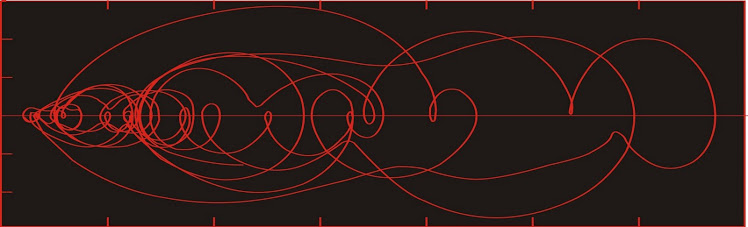
Two dimensional phase space reconstruction of dust flux from the Vostok core over the period 186-4 ka using the time derivative method. Dust flux on the x-axis, rate of change is on the y-axis. From Gipp (2001).
Showing posts with label Cote d'Ivoire. Show all posts

Saturday, November 29, 2014

The love trade is going in circles

It has been years since I looked at diamond prices--the same as true for cocoa.

Here in China, Single's Day has just passed--and it may be time to start thinking about Valentine's Day. With this in mind, let's consider diamonds and chocolate--two of the enduring commodities in the love trade.

Below I present a chart comparing the cocoa price (US$/tonne) against the RAPI index for 1-ct diamonds (or at least my best guess of it given the information at hand).


Since 2010, we have seen a big cycle, with our current position not far from where we started, with chocolate being relatively expensive, and diamonds relatively cheap*.

The cocoa price seems to be rising of late. There's no civil war in Cote d'Ivoire--this time, the culprit is the long-term lack of investment in cocoa plantations, combined with a fungus that has already killed about 30% of this year's global production.


Because of the coming chocolate shortage, I've been stocking up.


It's slow going though. The local chocolate is pretty bad, and the foreign stuff only comes in a bit at a time.

* As always, you should not view this as investment advice. Especially if you are buying for a special someone.

Wednesday, December 7, 2011

Two war criminals; but only one faces trial

As Gbagbo faces trial at the Hague, Ouattara runs Cote d'Ivoire.

Our housekeeper was outraged. Like many Ghanaians, she recognized that massacres were committed by both sides during the recent Ivoiran Civil War, but it is only Gbagbo going to the ICC. I told her it was a historical truth that the winners get to try the losers.

A few days ago we were having trouble with our truck and dropped in to a service station. Where in North America you would expect to find a Pirelli calendar, at this station they had the poster below depicting some of the crimes in question.

(Warning--graphic and disturbing imagery below).


Friday, November 11, 2011

Ghana and Cote d'Ivoire and other marine boundary disputes

There's nothing like the discovery of a new marine resource to bring a marine boundary dispute to a head.

The recent discovery of oil off the coast of Ghana has naturally lead to a boundary dispute with their neighbour, Cote d'Ivoire. The confusing thing was that the dispute centred around not the discoveries that were closest to the official border--it seemed that Cote d'Ivoire was claiming jurisdiction over a portion of the seafloor well within Ghanaian maritime space, and clearly directly offshore from Ghana. The details are sketchy, especially here in Ghana where internet connectivity is painfully slow, but supposedly the two governments are to meet early in the New Year.


Maritime border issues tend not to be as clear as land disputes.

Oil has been the cause of disputes in the Aegean Sea between Turkey and Greece, so this is by no means an unusual development.

From memory, I can recall a significant dispute between Canada and the United States over Georges Bank, which was a significant scallop resource at the time. The Canadian position was that the border would be equally distant from both countries, which would give Canada the seaward portion of Georges Bank (which had the best scallop fisheries). The American position was that Georges Bank was connected to the US continental shelf, and separated from the Canadian continental shelf by a deep trough, and so should be entirely American.

Now this discussion is entirely from memory, so any inaccuracies are mine. There were precedents for both positions. But when the case came up for arbitration at the International Court of Justice, the US presented a proposal in which the maritime boundary was extended seaward in a straight line from the last segment of the land boundary. The Canadian proposal was as described above. The Americans presented a map showing only the continental US, and the position of their proposed boundary. The Canadians projected the  American's proposed boundary onto a world map, revealing that the proposed boundary cut through Nova Scotia. Since the case was up for arbitration, the court had no choice but to accept the Canadian boundary, which is how we ended up with the good part of Georges Bank. At least this is how the story was related to me.

Saturday, September 24, 2011

Recognizing change in complex systems

"So I came downstairs and was surprised to find the dog reading the paper."

Such is the beginning of a typical shaggy dog story. If the story is true to form, the punchline would be something like the dog has been getting his news from the internet for years, or some such. If this were a true story, it would be that the dog is usually sleeping when I come downstairs. In such a case, I would presumably notice right away that the dog's behaviour was unusual.

One of the outstanding problems of complex dynamic systems is recognizing (hopefully in real time) when a change in behaviour is occurring.

Today we look at the long (ish)-term behaviour of some commodities with respect to one another. I haven't thought much about their economic significance. Today will just be arm-waving at charts, with a view to see if we can recognize the presence of change in the market fundamentals.

First up--some soft commodities. Below we see the ratio of cocoa prices to rough rice (contracts as defined in 1996).


The principal impact on the graph is from the first Ivoiran civil war. I find it interesting that the second war didn't really impact the price as much. Possibly this is because of rapidly increasing Ghanaian cocoa production. According to Voice of America, Ivoiran production is doomed due to years of under-investment.

The reconstructed phase space appears below. I have used the time delay method. To construct this figure I have smoothed the above data set through a 3-pt moving average filter, as the unfiltered data looked really noisy.

The fifteen years of data are confined to a comparatively small region of state space, with the only interesting feature the large excursion during the first civil war. This event lasted about two years. Note the magnitude, and more importantly, note the outcome--the system reverted back to the same area of phase space from which it began.

The second civil war by contrast is scarcely noticeable.

There are other ways to contruct phase space portraits. Instead of reconstructing them from a single time series we can build them from scatterplots of two (or more) time series. In studying geological systems I try to avoid this technique because it is difficult to build two time series of equivalent length and similar sample rates. For commodity time series this is less of a problem.

So let's go all out and plot the gold/copper ratio against the silver/rough rice ratio (all month-end closing prices).


IIRC, I have multiplied the silver price by 100 in the above chart. Silver and gold used $/oz, copper measured in $/lb.

Notice how for most of the fifteen year record, the states all plot within a relatively large oval (let's call this an LSA) within phase space. There have been three significant deviations from the LSA over the past fifteen years. The excursion marked A represents the strength in gold during the 2008-9 global meltdown. The excursion marked B is a rise in tandem of both silver and copper during the year 2006.

The last excursion (C) represents the recent rise in silver. This ongoing excursion appears to have lasted 17 months so far. The multi-billion dollar question is whether this is an excursion expected to revert to the  LSA, or has a bifurcation occurred, with the system evolving towards a new LSA somewhere else in phase space.

Refer once again to the phase space plot of cocoa/rough rice.

Bifurcations and excursions are both rare events. The excursions occur on at best a decadal scale. Bifurcations are more rare. Clearly they have happened in the past. For instance, the long-term gold/silver ratio was approximately 16 for centuries, but has not been near this ratio for several decades. A bifurcation occurred in the last century sometime. Perhaps we are in one now. Either way, I think it might be prudent to stock up on rice.

Disclosure: long gold, long silver, long copper, long cocoa, long rice. Sadly, I was forced to liquidate some of my cocoa holdings in the recent market turbulence.


But it was comforting.

Update (April, 2012) - I overlooked this story in the explanation for the rising price of cocoa in 2010. It seems to fit in with the first peak in the cocoa/rice ratio in 2010.

Monday, August 29, 2011

Americans diss Cote d'Ivoire again

Check it out. In the third column, which shows the per capita GDP in 2010 as estimated by the CIA--Cote d'Ivoire ranks last. Last. It seems that both the IMF and the World Bank both disagree.

Never mind that the IMF estimates per capita GDP for Cote d'Ivoire to be nearly ten times that of Burundi. What does the IMF know about economics anyway?

This is what happens when Americans don't like you.

Monday, May 16, 2011

Gadaffi to face ICC

As related here, Gadaffi and some of his assistants are being charged with crimes against humanity by the International Criminal Court.

How long before we see similar charges against Ouattara? Or does having liberal, democratic values make genocide okay?

Tuesday, May 3, 2011

Odds and ends

The news cycle is slow here in Ghana, especially when travelling. We had a gruelling all-day trip yesterday in which the truck suffered some sort of significant, yet hidden injury, requiring us to dump in a couple of litres of oil   every 20 km or so. As we approached one of the few bright spots on the bleak road from Mankessim Circle to Winneba Circle, my adventurous driver decided he wanted to see if the oil on hand would be enough to reach Winneba. I convinced him otherwise, arguing that the expense of a few litres of oil was cheap compared to the costs of blowing up the engine on a long, deserted stretch of highway in the middle of the night.

So I make it back to the office and what do I find? The TV has been fixed in my absence! And what's this? Osama Bin Laden is dead?!? And what's this? Harper wins a majority government, while the Liberals retreat to Isengard to lick their wounds? Perhaps Saruman will be thrown from the tower.

My last observation was in driving through Buduburam, a small town about 40 km west of Accra. The UN High Commission on Refugees (UNHCR) has a very snazzy building that has just gone up in this town, in acute counterpoint to the grinding poverty around it. Pretty blue banners wave in the breeze. The building has something to do with the Ivoiran refugees in Ghana, have no doubt, but does look a little too nice for actually housing them. I suspect it is for storing bureaucrats.


Wednesday, April 27, 2011

Americans and French begin new cold war in West Africa

Stuck in traffic this afternoon in Accra (the traffic is an entire book in itself). BBC suddenly stopped, and over the airwaves came Voice of America. I wouldn't normally listen to that but I wasn't doing much.

One of the top stories was a long diatribe on the problems in CĂ´te d'Ivoire. First up--it seems that Ouattara has launched "yet more" attacks against his former allies. It seems that the ongoing difficulties there are ultimately going to cause Ghana to become the Queen of Cocoa. There followed a fairly lengthy explanation of why this would be. According to VOA, the age of the average cocoa tree in Cote d'Ivoire is now thirty years, which is past the age of peak production. Farmers in CĂ´te d'Ivoire have not bothered to replant their trees because of the interminable civil problems. Why invest in new trees if your crops may be destroyed or your land confiscated in the fighting?

But what jumped out at me was the repeated mantras about Ghana. For an article which was supposedly about CĂ´te d'Ivoire, they sure talked up Ghana. Ghana is peaceful. Ghana is stable. Ghana will attract the foreign investment that CĂ´te d'Ivoire desperately needs simply to prevent its cocoa production from entering a terminal decline. Ghana has had peaceful elections since 1992. Ghana. Ghana. Ghana.

On the other hand, any time Cote d'Ivoire was mentioned, it was in the context of ongoing instability (now going on ten years), and implied instability of the new President, Ouattara. Infrastructure failing. Instability. Lack of investment. Cocoa trees dying. Production falling. Cote d'Ivoire soon to be of limited importance in the cocoa market.

A few weeks ago, I wrote this:
The Americans have promoted Ghana as the gateway to West Africa. A part of this is the development of a highway system through Ghana from the coast to the interior. The French have their own ideas--that Ivory Coast will be the gateway to the interior.
Considering that Voice of America is US propoganda, it is quite clear that the US intends to make Ghana the gateway to West Africa, and they have already launched their first assault against the French in West Africa.

Update--May 7

Not sure if this is connected, but just as I was leaving West Africa, the French propoganda channel stated that the French Foreign Minister had threatened to withdraw French troops from Afghanistan. Admittedly, the exact wording was "Withdrawal of French forces from the Afghan mission has not been ruled out"--but recall that a diplomat will never come out and tell you what's on his mind. Instead of "I hate your guts and I'm going to kill you", a diplomat would say, "We have a fundamental difference of opinion, but I believe there is an elegant solution to our current impasse."

Thursday, April 7, 2011

Ivoirans escaping by sea to Ghana

When I came out to Axim, western Ghana a few days ago, I expected to see many refugees from Cote d'Ivoire fleeing along the highway. But the road was completely dead--the border had been closed last week and nobody was getting through (although three weeks ago there was a steady stream of vehicles loaded with people and cocoa heading into Ghana).

The refugees are escaping by sea.


These fishing vessels have been cruising past the hotel every few minutes. The hotel staff tell us that this has been going on for weeks. The vessels are actually from fishing towns in Ghana, particularly Busua, Dixcove, Cape Coast, and points even farther to the east. The fishing in those areas has lately been poor, and the fisherman have found a new source of income.

They motor to Abidjan, or other coastal towns, pick up paying customers, and bring them back to their home port. The refugees are primarily Twi-speaking groups from the south of the country, who are culturally similar to the southern Ghanaians. They will also have been Gbagbo supporters.


I have to admit that it isn't as crowded as I would have thought it would be, but it is a long journey, and the boats are known to break in half. When fishing they are usually farther offshore.

Update April 12

According to today's Daily Graphic (a Ghanaian newspaper), the escaping refugees were not Ivoirans, but Ghanaians (more than a million of whom live in Cote d'Ivoire in the area surrounding Abidjan). They have been trapped there since the border was closed last week. There were harrowing descriptions of life for these Ghanaians (food cut off, people starving, dead children in the streets). As some of the fishing boats decided to return to Sekondi, many of these Ghanaians bought passage.

Tuesday, April 5, 2011

A plague on all their houses--Ghanaian perspectives on the Ivoiran crisis

Recent news has the UN carrying out air strikes in Abidjan. But the idiots are bombing the forces that are defending the city from an invading force. Killings continue.

In this article I will present the prevailing understanding that lives on the street in Ghana (particularly western Ghana). I cannot verify the truth of these statements, and acknowledge the possibility that there are many misconceptions. However I believe their stories may add a different perspective than may be presented in western news media.

Many Ghanaians feel that both Ouattara and Gbagbo are unfit to preside over their country. They have both disqualified themselves by resorting to violence. Even in the case of Gbagbo (whom most Ghanaians believe is the wronged party in the dispute--see below), Ghanaians feel that once it became clear that his resistance would lead to bloodshed, he should have become a great statesman, yielded power, and waited for the next election.

Ouattara is from the north of Ivory Coast. He is Ivoiran, but of Burkinese descent, as are many of the Mosi-speaking peoples of Ivory Coast. In the last election, Ouattara benefitted tremendously from miraculous voting patterns, in which villages of 500 delivered thousands of votes (unsubstantiated statement, probably from Ghanaian news article). Allegations of voter fraud were not investigated. He has won the election, but that does not give him the right to massacre those who voted against him. (If it does, then I pray Harper doesn't win next month in Canada).

On his last visit to the African Union, the Nigerians offered to arm him. The Ghanaians were not in favour of him, so the arms were shipped by a northerly route, through Burkina Faso (unsubstantiated statements).

Gbagbo is from the south, representing peoples who generally originated in Ivory Coast. In a sense, he is following a tradition, in that when he first won an election, the former President also resisted leaving office, and both sides resorted to violence. Gbagbo reduced French involvement in Ivory Coast, leading to a resurgence of formerly suppressed Ivoirian culture. Under the French, the only culture in Ivory Coast was French.

The perception of Ghanaians is that Ouattara will return Ivory Coast to France. Hence the arrival of French troops to defend "French interests" including the airport.

The Americans have promoted Ghana as the gateway to West Africa. A part of this is the development of a highway system through Ghana from the coast to the interior. The French have their own ideas--that Ivory Coast will be the gateway to the interior.

Although cocoa has been much discussed in the media, there has been much less dicussion about the offshore oil, which has been the subject of exploration and exploitation for much longer than the recently discovered oil off Ghana.

The attack on Abidjan was remarkably well coordinated, with simultaneous strikes on key facilities, such as the Presidential palace, the radio and TV stations, and arms depots. Compare this to the mob-like efforts of the Libyan rebels. There was a three-day period in which Ouattara forces massed outside of Abidjan, as supplies and ammunition were brought to the front, and plans were made. Once again, this is a suspiciously well-disciplined mob.

A helpful summary

Ouattara--bad
Gbagbo--bad
The French--bad
The UN--bad

A plague on all their houses!

A note about stepping back for the good of the country. When elections were held in Ghana in November of 1996, I recall being amazed at the distribution of votes. All through the thinly populated northern regions there were enormous numbers of votes for Rawlings' party (the NDC). Furthermore, the votes in the north were unanimously in favour of the NDC (e.g., 65,912 to 2). Kuffour's party (the NPP) decided not to contest the results. I remember the tension leading up to that announcement and the tremendous relief afterwards. The NPP were rewarded by winning the next election four years later.

Saturday, April 2, 2011

Massacres in West Africa: where are the airstrikes?

The situation in Cote d'Ivoire is deteriorating rapidly. A major massacre is reported at Duekoue, in the western part of the country. I don't know what news you are receiving, but what is being reported here (in Ghana) as the slaughter of Gbagbo supporters (who by all accounts lost the election) by Outtara supporters.

In Libya, Gaddhafi had only promised to massacre civilians. Here, actual massacres are already taking place.

Will there be any action on the part of the UN or other interested parties, or do they only protect civilians on the right side?

I am expecting to travel to Nzemaland, near the border between Ghana and Cote d'Ivoire early next week and will try to look in on the refugee situation.