Dust flux, Vostok ice core

Dust flux, Vostok ice core
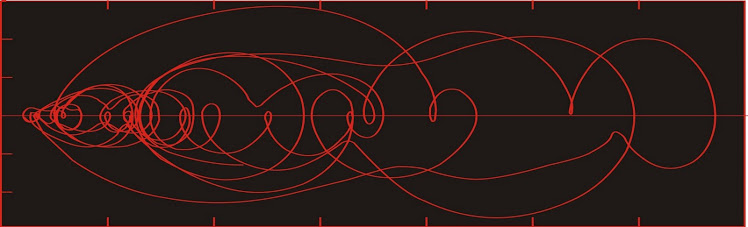
Two dimensional phase space reconstruction of dust flux from the Vostok core over the period 186-4 ka using the time derivative method. Dust flux on the x-axis, rate of change is on the y-axis. From Gipp (2001).
Showing posts with label earthquakes. Show all posts

Saturday, January 18, 2020

The History of the East Asia Monsoon

So I went to Washington DC last week for the AGU Chapman Conference on the East Asian monsoon. I found it to be a very rewarding conference, and even learned a bit about navigating around Washington on transit, as I was on a limited budget.

The conference was in AGU headquarters, which is near to Dupont Circle.


Not all that far from the Mall, although I didn't visit this time.


Speaking of scientists . . .

I was speaking during the opening session, which was about climate dynamics (and its role on the changes in monsoonal strengths through geologic history). A major dynamic role has been the rise of the Himalayan mountains and the Tibetan Plateau during the period of interest, and there is still a lot of debate about the importance of these tectonic events on the development of the monsoon. Some of the modeling studies suggest that the mountains only change the specific location of the rainfall, and that monsoon behaviour may occur even if there were no continents at all.

My work was based on analysis of global to regional proxy data sets, and has been summarized in all these places. Unfortunately, due to limited time, after working through the phase space reconstructions, I had to rush through the statistical computation part, and wasn't certain whether any of the message made it to the audience ungarbled. Fortunately, I was able to learn that at least some members of the audience understood the message.

The afternoon sessions were all about paleoceanographic records of the monsoon. Over the past decade, the International Ocean Discovery Program (IODP, formerly ODP and DSDP) has put down a number of boreholes in the Indus and Bengal Fans, and other boreholes in the Huang He fan and the Sea of Japan also provide useful records of at least some parts of the monsoon. The records I studied were generally global in scope--these other records allow for regional variations to be studied.

The next day's sessions dealt with continental environments (a common issue was the change in photosynthetic pathways of plants in response to environmental change during the Miocene) and records of continental erosion. Erosion is important because either rising mountains or increased rainfall will lead to increased erosion.

The last session was on modeling the effects of tectonic uplift as well as changes in the timing of the uplift, because there is still some disagreement about when the Tibetan Plateau was formed. I mean disagreement between it being less than 10 million years ago to more than 40 million years ago, which is a significant difference of opinion for something so recent.

The last portion of the conference was to break up into groups for focussed discussions on topics of interest leading to the testing of several hypotheses proposed at the start of the conference. I started off in the wrong room, so I was  with the tectonic modeling people rather than the climate modeling people, but was still able to ask about whether anyone had successfully had chaos appear in their model output. Results were inconclusive.

For the second group meeting I joined the combined discussion between the climate modelers and the paleoceanographic records group. Over the course of the discussion I eventually managed to come up with a proposal. See if the modelers observe chaos, and see if they can tell which style of chaos they have. Such chaos will be manifested as spatial variability in some climate effects, such as the location of the maximum rainfall. The models may have the type of spatial variability modeled correctly, but the specific timing of variations will be incorrect. That spatial variability will be recorded in the widely spaced paleoceanographic records which already exist. They type of chaos observed in the models will tell us what to look for in the cores; from the cores we can obtain the correct timing of the modeled chaotic spatial variations of the monsoon system.


Exiting the Metro Station at Dupont Circle

I wasn't sure how the last part of the conference would go--early on, many of the old hands were of the opinion that nothing ever comes from these things. But I thought it was pretty rewarding, particularly as it was during these sessions that I came to realize that people felt that whatever I was doing was worthwhile.

Alone in my corner of the world, I had never been sure.


Night flight back to Toronto

Saturday, May 30, 2015

Earthquakes and oil wells in Oklahoma

Further to last week's post on Oklahoma induced earthquakes, I have taken two slides (nos. 8 and 9) from this presentation (pdf), and plotted one atop the other.


In the above figure, the purple circles represent well completions from June 2010 to 2012 (appearing as a semi-transparent layer overtop the other), and the yellow circles represent the epicentres of earthquakes over the same time frame. Not all wells are associated with earthquakes. Most of the earthquakes are located in a few clusters, the three largest of which have been circled.

The reason that not all fracking (and its associated waste water disposal) causes earthquakes is because the local geology has to be predisposed towards producing earthquakes. There have to be natural stresses within the rocks to be released, and it helps if there are pre-existing faults to be activated by these stresses.


The three largest earthquake clusters plotted on a  geological map of Oklahoma (source - pdf). Interesting and complex structures lie at the root of the eastern portion of the map, as well as across the southern portion.


The three major earthquake clusters plotted on a map of fractures in Oklahoma (slide 14 in this document - pdf). I think the projections were different, which was why I couldn't get a very good overlay. But the lower two clusters of earthquakes are definitely in heavily faulted rocks--the northern cluster less so.

Monday, May 18, 2015

'Fracking' breaks Oklahoma

Well, maybe not yet.

This story in Zerohedge has attracted the interest of the Centre for World Complexity (that's me). So I've decided to take a little break from my ongoing travelogue of China to talk about some real geology for a change (possibly the first time this year).

Our topic today is intraplate earthquakes.But rather than reiterate what Wiki has already collated, let's apply our limited understanding of earthquakes to the situation in Oklahoma, while noting that our conclusions may also be applicable in other areas where fracking is being pursued (North Dakota? Saskatchewan? Ontario?).

Most large earthquakes happen at the edges of tectonic plates where the grind slowly past one another, but there are large stresses within plates as well. For one reason, the continental plates are all composed of small bits of tectonic material that have all become stuck together due to innumerable collisions of smaller pieces of material which couldn't be subducted. Because the plates are so large, the forces that drive them are dispersed over a large area, and stresses accumulate not only near the edges, but along any fracture that may exist within the plates interior.

Sometimes these intraplate stresses cause really big earthquakes. Perhaps the most famous such earthquakes happened in New Madrid, Missouri in the early 19th century. With a magnitude up to 8, they were the largest known earthquakes not directly related to a subduction zone in America's (known) history.


Seismic hazard map for the United States, from here.

Seismic hazard can be assessed in a couple of ways. By far the most significant approach is based on a study of the historical record of earthquakes. Hence, the two big red spots in the eastern US come from the large series of earthquakes in New Madrid in 1811 to 1812, and the Charleston earthquake in 1886. Several earthquakes have also occurred in the St. Lawrence valley (NE US) as well.

The historical record in the US is short, but the geology is long. The scale invariant nature of earthquakes allows us to estimate the recurrence interval of very large earthquakes in other places of the map (devoid of historical large earthquakes). Such recurrence intervals may be greater than a thousand years In such areas, stresses do build, albeit slowly--thus the likelihood of a large earthquake may be much greater than estimated purely on the basis of the historical record because it is so short.

Pumping liquids under pressure deep into the rocks has been correlated with small earthquakes since at least the 1960s. Our understanding of why this happens is more recent. It seems the fluids act much like a lubricant, allowing stresses that are already present in the rocks to be released. As far back as the 1960s, there were proposals for using such methods to control the build-up of stresses in the rocks and so prevent large earthquakes from occurring--however the approach has not, to my knowledge, been undertaken as a deliberate policy, probably due to liability concerns.

Now we see a series of reports and presentations (all pdf) by the Oklahoma Geological Survey showing a relationship between small earthquakes and fracking activity (the most important activity appears to be disposing of waste water in deep wells). Naturally, some people are concerned about liability.

Although many small earthquakes can be tied to oil and gas activity, no one has ever tied a large earthquake to such activity. And it is likely that no one ever will. Although the O&G activity is increasing the likelihood of small earthquakes, it is difficult to say what the impact on the likelihood of a large earthquake will be. The earth, even smaller parts of it, is a complex system, and part of what makes them interesting is that their response to stimulus is at least partially a function of the entire past history of the system. Our knowledge of earth history (especially around Oklahoma) is incomplete.

Suppose that in the absence of fracking, the recurrence interval for a magnitude 7.5 earthquake in a certain part of Oklahoma is on the order of 10,000 years (I have no idea if this is reasonable). Increasing the likelihood of small earthquakes may make a large earthquake more likely. If the last major earthquake in the area occurred in the 16th century, then probably there wouldn't have been enough time for the stresses in the system to build for a large earthquake to be triggered by fracking. But if the last big earthquake was ca. 10,000 BC, then there might be a problem.

There are costs and profits to be made from all kinds of human endeavours. Drilling for oil is one of them. I don't think we can allow the risks of induced earthquakes dissuade us from searching for oil, as it is a key determinant for economic progress. My concern is--are the people making the profits from oil exploitation going to be the ones paying the inevitable costs? 

Wednesday, April 2, 2014

From the small to the big: earthquakes, avalanches, and high-frequency trading

I've been talking about scale invariance a lot lately. I became interested in the topic quite a few years ago in the context of geological phenomena like earthquakes and avalanches. The Gutenberg-Richter law describing the size-frequency relationship for earthquakes was one of the first natural laws based on scale invariance, but interest in the topic really picked up with the Bak et al. paper in 1987 (pdf - may only be a temporary link).

The cause for this relationship is still foggy, as is the physical mechanism between the small and large earthquakes. The best proposed explanation is that the scale-invariant distibution of events allows for the most efficient flow of energy (and information) through the system (but it isn't clear why that should be so).

So back in the early '90s I was estimating recurrence intervals estimates for certain hazardous events and I started trying to work out a methodology for detecting scale invariance in the geologic record. Using the Gutenberg-Richter Law, you can estimate the likelihood of a large earthquake in an area based on the number of small earthquakes. There were interesting implications for areas where the recurrence interval of large earthquakes is longer than the local recorded history (as in much of Canada). At the time, there were seismic hazard maps produced by the USGS which showed significant earthquake risk in zones which mysteriously ended right at the Canadian border.

One of my classmates in my undergrad days (we're back in the 80s, now) studied the correlation between microquakes and fluid injection at oil extraction operations in southwestern Ontario. The oil companies were surprisingly cooperative until they understood the point of the research, after which they started to withhold data.

And here is the mystery. The principle of scale invariance in earthquakes would suggest that increasing the number of small earthquakes should increase the number of large earthquakes at least in the short term. Yet our understanding of the dynamics of earthquakes tells us that lubricating the fault should allow stresses to be relieved through the small earthquakes, which in the long-run should reduce the chance of a large quake in the longer term. (This idea has been proposed at various times over the past fifty years, but for various obvious reasons, it has never been deliberately pursued).

By the early 2000s, other geophysicists (notably Didier Sornette, but there were others) had moved a portion of their data processing expertise into studying econometric time series. I made this move later as I gradually came to appreciate the key problem with developing quantitative techniques when the data were suspect. First of all, the measurements themselves are inaccurate. More importantly, our estimate of the timing of each observation was just that--an estimate. Most quantitative methods assume that the observations are evenly spaced in time. Failing that, they assume you know the timing of your observations. The consequences of errors in the timing are terrible, and frequently underestimated. The point is that it is difficult to develop excellent quantitative methods when the data are terrible.

The big advantage of working with economic time series--pricing data, in particular, is the elimination of the observational errors. When a transaction occurs, there is no doubt about either the price of the time--right down to the millisecond scale.

I started looking at market macrostructure--because (several years ago) nothing interesting ever happened on a scale of less than about an hour. Until just the past few years. Suddenly, strange, rich, unusual behaviours began to occur in individual stock prices, and even indices, on the millisecond scale. I didn't know what was causing it--but it sure was interesting.


Three seconds on the tilt-a-whirl.

This was the signature of onset of HFT. I was initially interested in it for entirely different reasons than most of you. After Crutchfield's (1994) paper (pdf) on emergence, I had been pondering the idea of how to recognize a fundamental change in a complex system. Again, my interest was in the earth system as a whole, and how to recognize whether or not new observations were pointing to a fundamental change in its mode of operation.

Given our understanding that the number of large avalanches is positively correlated to the number of small avalanches, it seems pretty clear that (as Nanex and Zerohedge has been saying) the damaged market microstructure is mirrored in the increasing number of flash crashes since Reg NMS. Unfortunately, our murky understanding of how the microstructure causes the macrostructural changes can be used by the regulatory authorities to avoid investigation. They can't see a smoking gun.

We would normally expect the micro-crashes to eventually relieve imbalances in the system, improving its long-run stability. (Perhaps this is how the SEC justifies the practice). But unlike earthquakes and avalanches, these uncountably many small crashes are not reducing the imbalances. One reason is that the cause of the imbalances is separate from HFT--the dollars keep being shoveled to the top of the mountain as fast as, if not faster, than HFT brings them cascading down. Another reason is that the trades (mostly) get unwound--so the exchanges push most of the snow back to the mountaintop after the avalanche.

HFT certainly benefits unfairly from the system, but isn't responsible for it. If anything, it is a symptom of corruption--but the cause of the corruption is elsewhere.

Accordingly, my modest proposal for dealing with HFT is this--nothing. Don't bust trades--let them stand. I'd be curious to see the response of the various Ivy-League endowment funds and pension funds when they suffer brutal, near-instantaneous, multi-billion-dollar losses. At a guess, I would probably hear the screaming up here. How would real companies, producing real products, react to a sudden monkey-hammering of their stock price, especially if it triggered debt covenants? Maybe they would all exit the market en masse. It might even force a real change.

Thursday, May 9, 2013

Atlantis redux

This story is drawing a lot of attention to this post. (and why is that map upside-down?)

I won't say whether or not Atlantis exists. The topic isn't of great interest to me. But before you get too excited, be aware there are other means for large chunks of granite to find their way to the seafloor.

First of all, it is not clear whether the granite is embedded in the oceanic crust or is a clast (which we sometimes call a "raft"). It seems a long way offshore, but debris flows can go a long way.

Let's see where it is. According to the description, it is about 1500 km SW of Rio de Janeiro.


From the description of the location, I would place it somewhere near the red star. That sits on what does indeed seem to be a geologically interesting feature.

See all those roughly horizontal lines at the right of the image? Those are fracture zones. You can trace those all the way across the Atlantic to the find the corresponding point on the African coast where the two continents were attached prior to the opening of the Atlantic Ocean. The green on the left is part of South America. The light blue next to the green is the shallow water of the continental shelf, which we also consider to be part of the continent. The water depths of the continental shelf are generally no more than about 200 m.

The dark blue section between the continental shelf and the abyssal deeps where we see the fracture zones is  the continental slope, which is characterized by an increase in water depth from 200 m or so to about 4000 m. We normally consider this also to be part of the continent. It is covered by sediments and crap that have fallen off the continent (and is colonized by various organisms living on the seafloor).

The feature appears to be a relatively shallow area.


If we zoom in a bit, we can see what looks like a canyon running through the feature--whatever it is. Canyons on the continental slope are like the lower stretches of great river systems. They funnel flows of material from a tremendous area, all of which is higher up the slope. The flows through these canyons can be enormous, especially after earthquakes.

The Brazilian margin is tectonically similar to the site of the 1929 Grand Banks earthquake. If 180 cubic km of material got remobilized down the Brazilian slope by an earthquake sometime in the past, it would not surprise me if it contained some pretty impressive chunks of granite.

The feature looks like something that has come down the Brazilian slope. Google Earth images are insufficient for us to establish the age of the event--but that will probably come as more work is done on the feature.

Wednesday, April 25, 2012

Natural and Keynesian disasters

It seems that every week we are treated to a breathless dissertation of some natural disaster or other that is going to doom us. A few months ago I commented on one such impending crisis. Every so often I like to look at my stock portfolio, and it gets me thinking about disasters again.

It isn't a new phenomenon.

A common theme is a possible causative role for human activity. Indeed, there are reasonable physical mechanisms by which human activities may contribute to natural disasters. We have altered the composition of the atmosphere to measurable effect, and some believe that some component of recent climate variability is due to this action.


Human activity and earthquakes

Does human activity cause earthquakes?

We have known for a long time that injection of liquids into areas where there are tectonic stresses may reduce friction enough to trigger earthquakes--and direct relationships between (thus far, small) swarms of earthquakes and fluid injections at depth by the oil industry has been demonstrated in southwestern Ontario (Mereu et al., 1986), Colorado (Major and Simon, 1969), and other places--although no connection has ever been established between such action and large earthquakes.

The construction of large hydroelectric projects, which fills vast reservoirs with water, changes local mass balance and fluid pressures at depth, which has been suggested as a trigger for large earthquakes, such as the large Gujarat earthquake in January 2001. This mechanism has not been positively established as a trigger.

Given the amount of human activity, we might expect that there are more earthquakes now than in the past. It certainly seems that way reading the papers. Agencies like USGS (United States Geological Survey) and BGS (British Geological Survey) are valuable sources for data on geophysical disasters so that we may determine whether there is any correlation between catastrophes and human activities.

NUMBER OF EARTHQUAKES PER YEAR MAGNITUDE 7.0 OR GREATER
1900 - 1999

1900 13 1930 13    1960   22 1990     13
1901 14 1931 26    1961   18 1991 10
1902      8 1932 13    1962   15 1992N 23
1903 10 1933   14   1963   20 1993M 16
1904    16 1934   22   1964   15 1994     15
1905    26 1935   24   1965   22 1995E   25
1906    32 1936   21   1966   19      1996     22
1907    27 1937   22   1967   16      1997     20
1908    18 1938   26   1968   30      1998     16
1909    32 1939   21   1969   27      1999     23
1910    36 1940   23   1970 29
1911    24 1941   24    1971   23
1912    22 1942   27    1972   20
1913    23 1943* 41   1973   16
1914    22 1944   31   1974   21
1915    18 1945   27   1975   21
1916    25 1946   35   1976$ 25
1917    21 1947   26   1977   16
1918    21 1948   28   1978   18
1919    14 1949   36   1979   15
1920     8 1950   39   1980   18
1921    11 1951   21   1981   14
1922    14 1952   17   1982  10
1923    23 1953   22   1983   15
1924    18 1954   17   1984   8
1925    17 1955   19   1985   15
1926    19 1956   15   1986#  6
1927    20 1957   34   1987   11
1928    22 1958   10   1988    8
1929    19 1959   15   1989    7

Total 1900-1997 = 1960 events = 20 per year

* Most active year since 1900
# Least active year since 1900
$ Year with most people killed since 1900 (295,000 - 699,000;
 dominated by the Tangshan quake with casualty estimate from
 255,000 - 655,000)
N First full year of operation on NSN/digital recording system
M Year moment magnitude quotes were introduced
E Year energy magnitude quotes were introduced

Statistics were compiled from the Earthquake Data Base System of the
U.S. Geological Survey, National Earthquake Information Center, Golden CO

The table above used to appear on the USGS website years ago--but I can no longer find it. Part of it appears here.

Magnitude 7 quakes are pretty large, and it is reasonable to assume that we would be aware of them anywhere in the world going back to the beginning of the last century. We could not do the same sort of study for small earthquakes, as a those in remote settings would go undetected.

The maximum number of large earthquakes in the last hundred or so years occurred in 1943. There is no detectable correlation between large earthquakes on a global scale and human activity, although local correlations may exist which have not yet been established.

Human activity and catastrophe

However as we peruse the Munich Re statistics, we note that the economic costs of natural disasters do correlate with human activity. This correlation is due to the rapid spread of occupation of previously marginal lands, and the greater concentrations of wealth and developed property in geologically dangerous areas.

Comparison of distribution of insurable losses worldwide in 2011 and from 1980 to 2011. Figures from Munich Re annual report.

For instance, we note that there has been a remarkable increase in the fraction of insured losses due to natural catastrophes in Asia. From 1980 to 2011, Asia was responsible for 13% of insured losses worldwide. But in 2011 alone, the fraction of worldwide losses in Asia spiked to 44%. A lot of this was due to the damage done by the Tohoku earthquake and tsunami, but this was only responsible for 30% of Asia's insurable losses. This increase in importance is a reflection of the rapid growth of property values in Asia.


Data source here; graphic from Munich Re annual report.

We see a steady climb in the number of US Federal disaster declarations over the past sixty years. Are we to conclude that there have been more disasters? Or is it simply that more people have been impacted by them? If so, why?


Over the last 25 years it looks like US tornado activity is up, but worldwide hurricane activity is down. Global earthquakes, as we saw above, don't really have a trend. But there has been a definite increase in the number of declared disasters in the US. These have not been caused by an increase in the number of disasters. What we are seeing is the effect of the growth of suburbs and the expansion of expensive coastal properties in hurricane-prone areas of the United States.


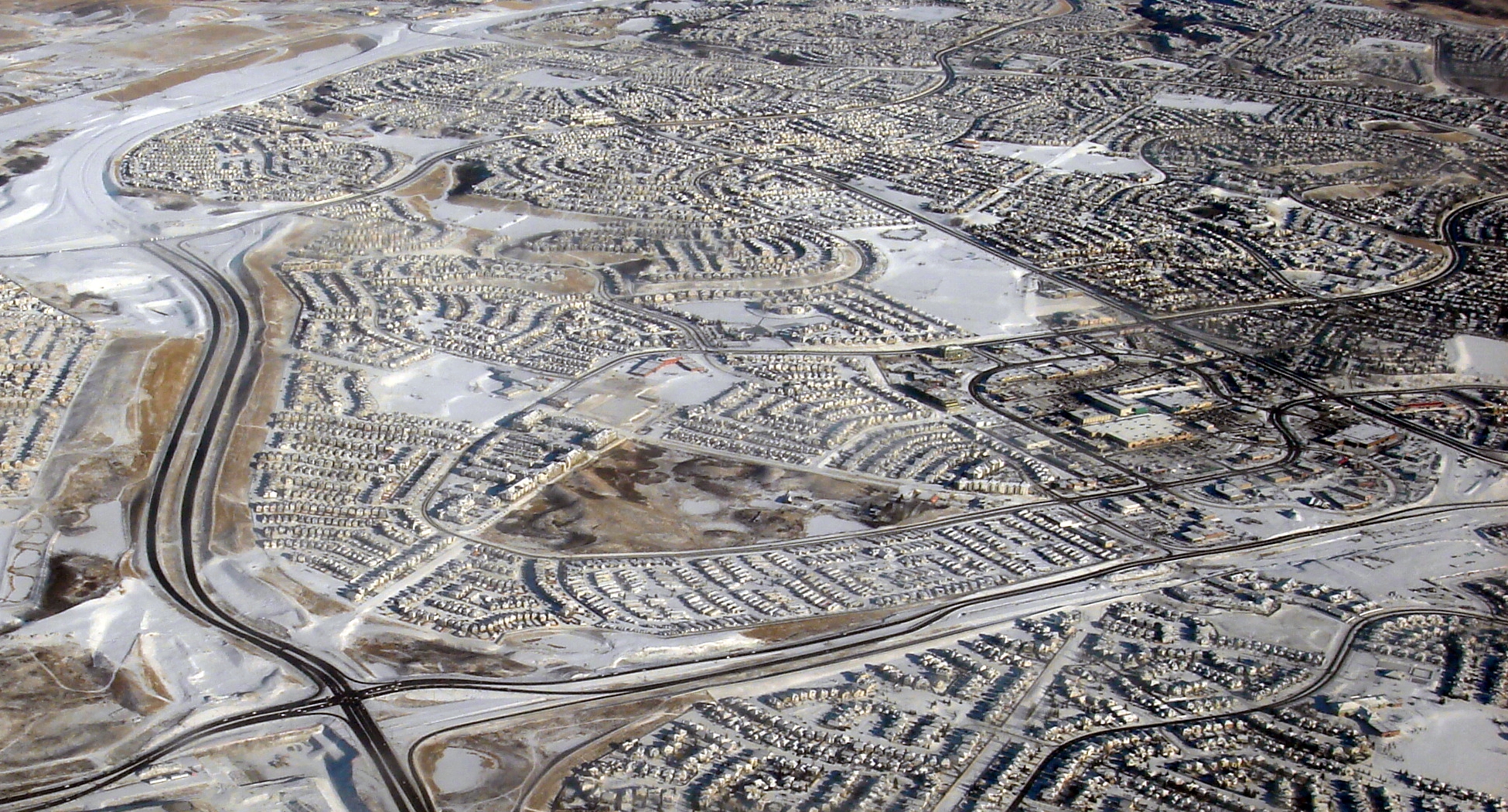
In tornado-prone areas, sprawl like that depicted above greatly increases the chances that houses are impacted by tornadoes. Similarly, sprawl into forested areas increases the likelihood of forest fires consuming the neighbourhood; sprawl up the sides of hills increases the likely impacts of landslides, etc.

Keynesianism and the growth of suburbs

The symbiosis between the Keynesian expansion of the economy and the growth of suburbs in US cities has been ably discussed by Beauregard (2006). Sprawl was driven by the flow of money, the "American dream" of owning a home in the suburbs, and facilitated by the widespread ownership of cars. The suburbs were designed with cars in mind.

The growth of suburbs fulfilled two roles. Lots of houses were available for new buyers, which kept prices down; and city governments discovered that developer's fees and the new land taxes initially exceeded the maintenance cost of the new roads and infrastructure built to support them,. Unfortunately, as time passed and the infrastructure aged, soon maintenance costs exceeded tax revenues, necessitating another round of growth. Suburbs were able to maintain the required level of growth for a few decades, but we are reaching the point everywhere (it seems) where there cannot be enough new growth to maintain our crumbling infrastructure.

The mindset of the "ownership society" really drove demand for housing, and the best places to expand were in the southwest, so that cities like Phoenix and Las Vegas really grew. Low interest rates plus easy money led to a bubble in house prices and an explosion of sprawl.

The Austrian school of economics teaches us that easy money leads to malinvestment. Suburban growth certainly seems to qualify. Our urban sprawl malinvestment has left us with the interwoven problems of unlivable cities, financial crisis, and increased death and destruction from natural disasters.

References

Beauregard, R. A., 2006. When America became suburban. University of Minnesota Press, Minneapolis, 271 p.

Major, M. W. and R. B. Simon, 1968. A Seismic Study of the Denver (Derby) Earthquakes, 63 Q. Colo. School Mines 9.

Mereu, R. F., J. Brunet, K. Morissey, B. Price & A. Yapp, 1986. A study of Microearthquakes of the Gobles Oil Field Area of Southwestern Ontario, 76 Bull. Seismol. Soc. Am. 1215.

Nicholson, C. and R. L. Wesson, 1990.  Earthquake Hazard Associated with Deep Well Injection--A Report to the U.S. Environmental Protection Agency, U.S. Geol. Surv. Bull. #1951.

Friday, February 24, 2012

Another view on default cascades--Battiston et al. (2011)

This paper (pdf) was recently published in Switzerland, and provides an interesting look at our recent topic--default cascades. Although these papers are mathematically dense, they are worth working through sometimes as they may give some foreshadowing of future economic policy.

Block-slider model of earthquakes

Battiston et al. (2011) have presented a model of the financial system which might look like one of Turcotte's slider-block models of earthquakes, which are comprised of numerous blocks of (possibly varying) masses, connected by springs, having to slide across a surface with a limited (and possibly variable) friction. Motion in one block can change the stress field across the model, possibly triggering slip in one or more other blocks.


The original slider-block model consisted of two blocks connected by a spring, both of which sat on a somewhat rough surface (so there would be friction between it and the blocks). If block A moves some small distance, then it will add to the forces on block B. That force may be enough to overcome the friction which kept block B stable. If both blocks move together, we have a larger earthquake. The simple two-block slider model exhibits chaotic behaviour (Turcotte, 1997). I remember attending a conference a few years before the above volume was published when Turcotte presented a more advanced model that looked something like the one below.


We are looking at a plan view of several interconnected blocks. The frictional forces vary for each block, and each block has its own driver. Once again, the slippage of a single block may trigger slippages in one or more blocs--the more blocks that slip, the larger the earthquake. We might expect such models to satisfy the Gutenberg-Richter law which is an observed distribution of earthquake sizes through time that is consistent with a system at self-organized criticality (SOC). But I'm not sure because I've never seen the results although comments on similar models used to study avalanches were consistent with SOC (there are those avalanches again).

Block-slider model of default cascades

According to Battiston et al. (2011), prior to the financial crisis of 2008, existing models suggested that major financial entities had diversified their debts and obligations sufficiently that the likelihood of systemic failure was negligible. The observed financial crisis suggests that this conclusion was unwarranted, to say the least. The authors attempt to study the effects of diversification on systemic risks using a model conceptually similar to the block-slider model above.*

In the financial model, the blocks represent financial institutions. There are a large number of possible interactions between one institution and its neighbours. Furthermore, there is a richness to the interactions that is missing in the earthquake slider-block model--the debts and credits between institutions may each be long- or short-dated, so that there may be a mismatch in maturities between the credits and obligations of any one institution.


In the above figure, which shows only a portion of the potential interactions among entities A, h1, h2, etc., the arrows point in the direction in which credit has been extended. Credit may be long- or short-term. For instance, entity A has extended long-term credit to entity j1, and short-term credit to entity m1; and in turn has borrowed long-term from entity h1, and borrowed short-term from entity n1.

The authors carry out the following experiment. Assume an initial allocation of assets and liabilities across different participants, and derive (logically rather than empirically) a law of "motion" related to financial robustness of each agent affected by one or more of the initial defaults, as measured by their equity ratio. Models are run and the size of the default cascade is compared to the initial distribution of robustness and risk diversification.

The interrelationships between all the balance sheets of the various financial institutions links the dynamics of the individual equity ratios in ways that are not easily predictable.

The authors identify two "externalities" to the triggers for default cascades: 1) variability of financial robustness of all of the interconnected financial entities; and 2) the average financial robustness of the interconnected entities.

If all parties have similar financial robustness (variability is low), then increasing connectivity makes the system more robust. Stability is even likely through diversification if the individual parties are not very robust. It was only when the initial robustness was highly variable across agents (i.e., some agents are weak and others strong) that increasing interconnectedness tended to stimulate systemic defaults.

The second "externality" is a consequence of incomplete information--and deals with the likelihood that creditors will force a foreclosure on an otherwise solvent entity due to the fear that some of its counterparties might fail. Losses may therefore be amplified along the chain if runs begin on entities which may be technically solvent, but which may then be forced to sell long-dated assets at fire-sale prices to raise cash. Model runs suggest that if the average robustness of agents is high, then increased connectivity is beneficial. For low levels of average robustness, then increased connectivity has no effect. For intermediate values of average financial robustness, increased connectivity tended to stimulate systemic defaults.


The lesson here is diversification is not always a good idea. If you diversify across financial entities with wide risk profiles (i.e., some are weak and some are strong) you actually increase the likelihood of a financial calamity.

We don't have to confine ourselves to financial institutions. If we consider our agents to be sovereign, we expect the same problem. Creating a financial superpower out of a group of Germanys would be perfect--even a group of Greeces might be okay. But creating one out of Germanys and Greeces tends to encourage a financial catastrophe. Who could have predicted that?

The authors suggest that the "fix" for this situation is to concentrate risk rather than diversify it. I wonder--in whose hands will the risk be concentrated? Perhaps if you hold gold, the risk won't find its way into yours.

References

Battiston, S., Delli Gatti, D., Greenwald, B., and Stiglitz, J. E., 2011. Default cascades: When does risk diversification increase stability? ETH Risk Center Working Paper Series.

Turcotte, D. L., 1997. Fractals and chaos in geology and geophysics, 2nd edition. Cambridge University Press.

* one key difference between the default cascade and an earthquake--in an earthquake, the tsunami (if there is one) happens afterwards. The ocean of liquidity in which we find ourselves has preceded the major financial earthquake.

Tuesday, March 15, 2011

Nuclear power and geologic hazards 2--southwestern Ontario

Since the problems in the Japanese nuclear reactors have been publicized, the safety of nuclear power plants comes into question everywhere.

How are North American reactors in terms of earthquake safety?

Are nuclear reactors in Southern Ontario at risk of earthquake damage.

The Toronto Star has published its answer. No, they say. The basis of their argument is that southwestern Ontario (particularly the Lake Ontario and Lake Huron basins) are not known for large earthquakes.

It is well known that the western margin of North America is seismically active. Less well known is the potential for seismic activity in eastern North America.

Here is the seismicity map for eastern North America from the USGS. Sourced from this document.

Right away we see four hot areas--in South Carolina; in Missouri; near the mouth of the Gulf of St. Lawrence; and along the Ottawa River. These areas represent the locations of sizable earthquakes in the past 200 years.

Four significant shocks (magnitude 7-8) occurred in the New Madrid area between December 1811 and February 1812.

A major earthquake occurred in South Carolina in 1886.

The Charlevoix seismic zone is the most active in eastern Canada.

Significant earthquakes have occurred along the Ottawa River from Montreal to Temsicaming.

The map is entirely dependent on the past record of earthquakes. Prior to 1811, it is unlikely that central Missouri was considered a seismic hazard area. The next major earthquake, wherever it occurs, will generate its own spot on the map.

To evaluate seismic risk, we need to evaluate structures. In eastern North America, a major plane of weakness intersects the earth's surface along the St. Lawrence River, and passes through Lake Ontario and Lake Erie. It passes southward, and follows the trace of the Mississippi River to the Gulf of Mexico. A failed rift arm extends through Lake Huron and Lake Superior (these structures go a long way towards explaining why these features are where they are).

The main structural feature passing through Lakes Ontario and Erie and up through the St. Lawrence is the same structure on which the near magnitude 8 events occurred in 1811-12. We therefore must recognize that there is potential for events of similar magnitude in southwestern Ontario. The reason why this is largely unrecognized is because such an event has not occurred in recorded history.

One of the charming things about earthquakes is that they demonstrate scale invariance. In particular, the size distribution of earthquakes in any given area shows a 1/f distribution. This relationship has long been observed in seismic studies--the famed Gutenberg-Richter law is an example of an empirical law which has been shown to have predictive value.

If you have an area where historical records are short, and you have only observed small earthquakes, it is still possible to make use of the scale-invariant nature of earthquakes to predict the recurrence interval of earthquakes larger than noted in the historical record. Using this technique, Arsalan Mohajer calculated that the recurrence interval of a magnitude 6.5 earthquake in western Lake Ontario was 1000 years. (see figure 2).

Figure 2 of Mohajer, 1993.

True, he doesn't actually state the numbers in the report, but the extrapolation of the data in the figure above gives us a recurrence interval for a magnitude 6.5 earthquake to be 1000 years.

Assuming that the power plants are to last 50 years, there is a 1 in 20 chance of an earthquake of this magnitude affecting them. The hazard assessment for earthquakes in Ontario is based more on the official data, which notes the lack of any such events in the past 250 years.

Reference

Mohajer, A. A., 1993. Seismicity and seismotectonics of the western Lake Ontario region. Geographie physique et Quaternaire, 47:353-362.

Sunday, March 13, 2011

Nuclear power and geological hazards

There is considerable excitement over the damaged nuclear reactors in Japan after the earthquake and tsunami.


The explosion at the Fukushima nuclear power plant looks bad at the surface. What's behind it?

As soon as the earthquake occurred, the power plants shut down automatically. The control rods enter the core to stop the nuclear reaction. There is a great deal of residual heat, which is handled by the plant's normal cooling system. But the earthquake damage was severe enough to knock out power to the plants, so the cooling system had to be run off backup diesel generators.

The backups have failed because diesel generators don't run well underwater.

So the Japanese have to run around on their destroyed infrastructure and bring power to these plants.

Notably, the power plants were designed to withstand a magnitude 8.2 earthquake, so they have done well to be still there after the 8.9.

However, the sequence of events since Friday does not appear to have been anticipated by the engineers.