Dust flux, Vostok ice core

Dust flux, Vostok ice core
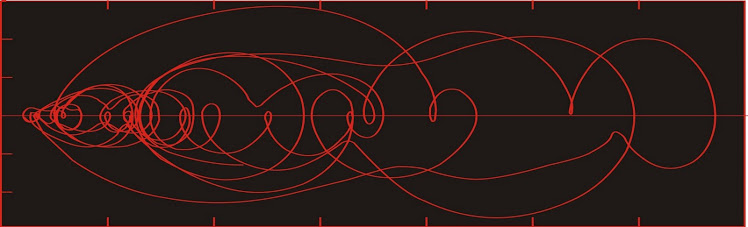
Two dimensional phase space reconstruction of dust flux from the Vostok core over the period 186-4 ka using the time derivative method. Dust flux on the x-axis, rate of change is on the y-axis. From Gipp (2001).
Showing posts with label authoritarians. Show all posts

Monday, May 27, 2013

Denial of authoritarianism--no, end the Fed

Salon has an article on denial of science by mainstream society. The article asks why people deny the unpleasant truths that modern science has to offer--apparently preferring to chance of the impending hell of global warming and non-fluoridated drinking water.

The thing the authors don't understand is that the general public is not pushing back against the science per se. They like the science. Science gives them big, flat-screen TVs, Blu-Ray players, cars, airplanes, special effects, laptops with more computing power than ENIAC, the internet, and so forth. They love science.

They don't like authoritarians telling them what to do. So bugger off.

-  -  -  -  -  -  -  -  -  -  -  -  -  -  -  -  -  -  -  -  -  -

Okay, I'm a little calmer now. There is another point in this entire discussion I would like to mention.

Past environmental issues have been dealt in a top-down, authoritarian fashion. Acid rain and ozone depletion were both attacked, with considerable success, by legislating against the sources. But this only worked because the main sources were few in number, easily tracked, and there were solutions available for the problem. CFCs were replaced by other coolants with less effect on the ozone layer, but this solution was only possible because the alternate coolants existed.

In earlier articles we have discussed the issue of multistability in the climate system. During periods of relative stability, negative feedbacks dominate, with the effect that the system appears to resist changes. The capacity for resistance to change is not infinite, and eventually a tipping point is reached, beyond which positive feedbacks dominate, leading to very rapid change. This idea would suggest that the climate system will resist changes to atmospheric composition for a time, which may be why there hasn't been the warming that was predicted by the IPCC models (pdf).

Governments would like people to stop emitting so much CO2 (through driving, power requirements, and industrial use). Well, alright then. 1) What replacement is there that won't significantly impact on lifestyle; and 2) has the government considered its role in the CO2 problem?

In an earlier article I discussed how the increasing number of disasters in the US is more a function of urban sprawl than any increase in frequency of natural events.

A big part of the reason that per capita CO2 emissions are higher in North America than in Europe is our urban structure--in particular the vast suburbs that surround most city centres. The big suburbs mean lots of people commuting, but the density of the sprawl is too low to favour high-capacity transit.

Big suburbs are only possible due to easy money. With no easy money, working families would not aspire to owning (alongside their bank) a huge home with a vast lawn and with neighbours within 5 m. Without easy money there wouldn't be two or three cars in the driveway.

Governments like this model of city development--it gives people hope, which helps keep the system going. Banks certainly like it--there's a lot of interest payments stretched out over 30 years, and until recently, people would practically starve rather than miss mortgage payments. People imagine they are happy, although I wonder what the future generations will think of people who willingly bought homes that took 30 years to pay for, instead of the more historically common few weeks to months. But I don't think the owners of these houses have done as well on the deal as the government or the banks.

So having created the template for massive CO2 emissions, the authoritarians wish to deny responsibility and shift the blame to their debt-serfs. Because the debt-serfs are refusing to absorb the costs, the authoritarians decry their denial of science.

If you really care about global warming, end the Fed.

Tuesday, January 8, 2013

Book review: Beyond the Blue Gate

The interrogation of persons engaged in security threats and subversive conspiracies is not an invitation to a dinner, as Mao said of revolutions. It is a very serious matter. No person would implicate himself if he can help it. It is therefore necessary to break down the defences which a suspect automatically builds around himself. To discuss ISD's [Internal Security Department] methods of interrogation is to risk reducing their effectiveness. The government makes no apology for their effectiveness in uncovering the truth without torture. And they have been varied and improved from time to time.
                                   - Chin Fook Leong, in Far Eastern Economic Review, Nov. 12, 1987

Beyond the Blue Gate: Recollections of a Political Prisoner describes the arrest, interrogation, and imprisonment of the author, Teo Soh Lung, for "taking part in a Marxist conspiracy" (according to the Internal Security Department). The book also deals with the arrests of her "co-conspirators", who appear to have been arrested for making statements critical of legislation passed by the government headed by Lee Kwan Yew.

The book should be viewed as a cautionary tale--about government agencies with virtually unlimited power and no oversight.

In the mid 1980's, according to the government, Singapore's democracy was under threat of imminent violent overthrow by Marxists bent on creating a Communist government. In support, on 21 May 1987, some two dozen individuals (including the author) were arrested in connection with this conspiracy. Not a single gun, bullet, knife, or slingshot was presented as evidence--however, as we have seen in many places since, once security directorates have made such a claim, they will go to extraordinary lengths to cover up their errors. If that means that a few dozen individuals lose their reputations and businesses, the government views that as preferable to its own loss of prestige.

Ironically, the People's Action Party (which was and is the ruling party in Singapore) originally began as a socialist party allied with pro-communist trade unions.

The loss of reputation is a grievous blow, particularly when there is no chance the government will admit to a mistake. The author describes how, during her arrest, she saw one of her neighbours standing outside, but the moment they made eye contact, the neighbour disappeared inside. It is a scene reminiscent of Solzhenitsyn (though unfortunately not as well written)--the arrest in the wee hours of the morning; the neighbours pretending not to know you. And during the interrogations, the dropped hints of arrest or punishment of your friends and family--and the long days and weeks in isolation, never knowing.

I recall dimly hearing of these events at the time, and smugly thinking that such things could never happen in any North American country. I viewed it as evidence that Singapore was not a "real" democracy.

Reading this book in light of the War on Terror, and the prospects for unlimited detention (or even assassination) on the basis of an assertion by an executive authority has broken my earlier smugness. Instead there is a mounting horror of what is happening in what I used to think were real democracies.

They, too, do not apologize for the effectiveness of their interrogations.

Tuesday, September 4, 2012

The gold standard according to David Olive

In this article, David Olive denigrates the Republican Party of the US (the GOP) not because of its warmongering, or its catering to Israel, or even its anti-(Mexican) immigrant bias. No, he attacks the GOP because it wants to bring back the gold standard.

The Republicans cannot be in favour of a gold standard (Ron Paul notwithstanding). The entire significant political establishment of the US is opposed to a gold standard. No politician can make a serious run at the leadership of either party and support a return to the gold standard. It can't happen. So put it out of your mind.
Ryan himself is too smart to speak of a revived gold standard, which suffers a lingering “barbaric” reputation among economists. In a recent poll cited by University of Chicago professor Richard Thayler, noted in the latest Atlantic, not one economist endorses a return to the gold standard.
The datum that "not one economist endorses a return to the gold standard" tells us much about the state of economics today. At the same time, considering the role that economists play in government finance, it is a message about the likelihood of a gold standard. There is none. For as long as the system holds.

For the rest of the article he recounts the tired old arguments against a gold standard that we have all seen before--its disastrous prevention of government intervention, its volatility, and its rarity. He tell us:
A return to the gold standard is wildly impractical. Requiring the Fed to hold gold in equal amount to currency outstanding would force it to set a fixed price at which it would exchange currency for gold. 
This is an obvious canard. As has been abundantly documented elsewhere, during the gold standard, neither the governments of the US nor Britain had anywhere near enough gold to cover all currency in circulation. Paper money was convertible, but the majority of people had no interest in such a conversion, provided they had confidence in the system.

It is much the same today. Paper money has value because people have faith in it. However, unlike a gold standard, if you suddenly lose faith in government's management of the economy, you have no real way to protect yourself. Perhaps you would exchange your national currency for some nice American currency? But then you have to have faith in the US government. Around the world, it is true, most people do. But such trust can end.

David Olive doubts that the Fed Governors would have the wisdom to set the gold price to the correct level. He writes:
Set the price too high, and monstrous inflation would result. Set it too low, and the result is the even greater catastrophe of deflation, the defining malaise of Japan’s 20-year-long economic stagnation. Just as one cannot time any financial market with precision, so it is with fixing gold at a price deemed ideal.
And yet he seems to have complete faith in the Fed's ability to set interest rates! Doesn't he wonder what happens if interest rates are set too high--or too low? If they can set interest rates, they can set a gold price--it's a political decision anyway.

As for volatility, the following chart (sourced here) shows us where price volatility really began.


Prior to about 1970 there are spikes in commodity prices related to wars and (in 1815, the "year without a summer") to natural disasters. It's true that after the WWII/Korean War spike, the price level did not decline. But since Nixon closed the gold window there has been no looking back.
Republicans in Tampa this week invoked cherished values of freedom, patriotism and self-reliance. But what they stand for is anarchism.
Well, after the last century with the murder of over 100 million people by their own or other governments, maybe it wouldn't hurt to consider something different.

Deep down I think Mr. Olive's problems with the gold standard comes from its thwarting of government's  authority. Under a gold standard, if the citizenry decided to take issue with government economic policy, they could send a strong message by converting their currency to gold.

The authoritarians intent on forcing democracy on the rest of the world want these populations captive to their governments--and a gold standard, which would give citizens power over their governments, has no role in this world. 

Sunday, August 26, 2012

Autoritärenerdammerung!

A recent article discusses an old document (the "Report from Iron Mountain") supposedly written by a committee of academics, explaining why war was necessary as an organizing principle of society. Supposedly these academics decided that if warfare didn't exist it would either have to be invented, or some replacement found. Numerous suggestions are made (the report can be found here).

The report finds difficulties in worldwide disarmament. The problem reiterates an old economic fallacy, which I am certain has been exploded by Bastiat previously. The pamphlet assumes that if there is no longer demand for weapons, missile systems, and the like, then all the poor employees of the companies that make such products will have to be retrained and put to work in some other (centrally planned enterprise) - suggestions included (but were not restricted to): 1) a worldwide program to improve human welfare; 2) endless space exploration; 3) a minutely detailed program of disarmament with forced inspections; 4) the creation of an omniscient, omnipotent global police force; 5) a desperate program to reverse global environmental catastrophe. Other options were offered as well.

I can see why this document is viewed as a hoax. Why replace our economic model of endless warfare with these alternates when we can have the endless war and the alternates?

The real problem with this document (and what gives it the whiff of truth in my opinion) is that it assumes an authoritarian framework. This premise is never stated, but it permeates the entire work. The document never considers that people might be able to make decisions on their own. Instead, the document would have us believe that war is a force gives us meaning.

Is it natural that war be a central organizing force, or is this a conclusion that has been forced upon us by our "betters"?

The trouble with authoritarians is that they believe that they can make any part of our human or cultural systems reflect the "reality" that they create. For instance--as covered in this blog before--Keynesian economics suggests that low interest rates automatically lower the unemployment rate. Empirical observations indicate that such is not the case, yet the Keynesians continue to set economic policy in accordance with their flawed assumptions. Such pig-headedness is akin to a physicist claiming that gravity could be made to fall off with the cube of the distance, given sufficient funding, and that the benefits of the new result would more than justify the costs.

In a free society, capital which was no longer being used to build complex weapon systems would be used for other purposes, as directed and desired by customers. I don't know, and probably can't imagine how the capital would be used, but that isn't actually necessary as it is better for the economy if I don't try to direct it. That is the key point missed by the authors. The capital would be used. It isn't necessary to direct it.

I frequently get a sense of frustration from the writings of some of these economists when they fret about the suboptimal strategy of, say, handmaking furniture as opposed to churning out by the container load out of some factory. The argument is about efficiency, and survival of the fittest. However, one of the things that we observe from nature is that all sorts of critters pursue what appear to our eyes to be suboptimal strategies--but here they are. They have persisted to the present day because their survival strategies are optimal when the environment is different than it is today.

Nature thrives from diversity. Diversity is what gives nature strength and ecosystems their resilience. Despite numerous attempts, we have not succeeded in creating a stable biosphere. Our limited understanding suggests that a functioning biosphere needs a lot of different types of plants and animals, and the more different types, the more stable it is likely to be.

Part of the stability is due to the presence of the suboptimal organisms, some of which really shine when climate suddenly changes, or lots of volcanoes erupt and make the sea acidic.

If autonomous political systems were organized along the same lines as natural systems, there would be a range of sizes from very small to very large. The organization on a global scale is not natural--it is shaped by a historical reality that large political entities have a military advantage over smaller ones--France and Spain vs Italian city-states, for example. The authoritarian vision appears to be to create a larger political union still.

But the end is coming for them. We have entered the twilight of their vision. It is the same fear that motivates the Report from Iron Mountain. The system is too complex to be controlled. Back then the authorities said they feared chaos breaking out over the necessary changes to the economy that would follow from a transition to perpetual peace. In reality they feared the loss of control.

The potential for the loss of control is magnified by the aspirations of billions of people, who can now contact one another directly free of authoritarian oversight. The authoritarians cannot control the future.

Instead they must accept there is nothing to do but watch it unfold.

Like this . . .