Dust flux, Vostok ice core

Dust flux, Vostok ice core
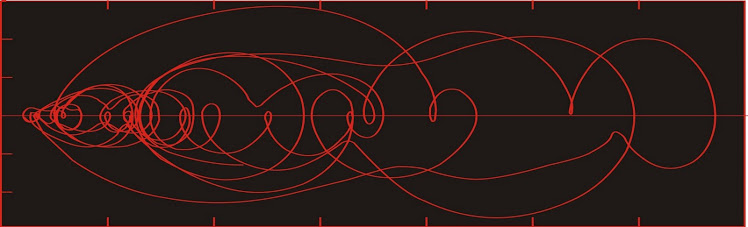
Two dimensional phase space reconstruction of dust flux from the Vostok core over the period 186-4 ka using the time derivative method. Dust flux on the x-axis, rate of change is on the y-axis. From Gipp (2001).
Showing posts with label government. Show all posts

Sunday, December 7, 2014

National suicide and the nation state

The topic of national suicide seems an appropriate topic for the anniversary of the Japanese attack on Pearl Harbour. The Japanese people bore very little animosity to America. No doubt many of them remembered the aid that came to Japan after the big earthquake in 1923. Sadly, like in all other countries, the Japanese people were not in control of their country.

Like all wars, this war was sold to the people as a matter of national survival. But it was to be a survival in which Japanese people were destroyed in vast numbers to "save the nation." By the end of the war, soldiers were being outright sacrificed in order to achieve limited tactical successes.

The movie For Those We Love*, the pilots are preparing to leave on their final mission. The father, brother, and sister of one of the pilots have arrived to see him off. As he is about to enter his plane, his father pleads for him to come back to talk to him one last time (it's at about 2:35 of the following video). Unfortunately, his last words for his son are a lame cliche ("Do your best. We are all counting on you." And so on). My thought was that if that were my son about to fly off to die, I would have told him, "See that tent over there? That's where your commanding officers will all go as you leave. So after you take off, come back and strafe the hell out of it."


Now I read in this article that at least one pilot did attack his commanding officers. The article argued that the Kamikaze phenomenon in the latter part of the Pacific War was a particularly noxious brew of statism and Zen Buddhism.

I don't believe the Zen Buddhism part to have been necessary. The kamikaze pilots were not driven to suicide out of a philosophical concept of nothingness. They were ordered to, or perhaps pressured ("Come on, you don't want Japan to lose the war because of you, do you?"). The desire for death came down from the top, mostly from people who did not have the grace to kill themselves afterward.

The noxious mix came from a government that equated "the country" with themselves rather than with the people. As a consequence, the government was willing to sacrifice as many of its own people as was necessary to ensure its own survival. The lesson here applies not only to the hapless wartime Japanese, but to everyone in the world from the United States and Japan, to the Ukraine, and even non-state actors such as ISIL. The most obvious antecedents are in the suicide bombers that have struck targets around the world.

Today most of the developed countries of the world are pursuing economic policies "to save the nation". Unfortunately, they are predicated on arguments that the elderly will bankrupt the state: thus the state must strike back through low interest rates and understating inflation.

In fact, President Barack Obama’s budget wouldn’t take a dime from anyone’s current Social Security check. It would merely reduce the growth of future benefits by changing the way the government calculates inflation.
What the president has done is to endorse the notion that our current Consumer Price Index overstates inflation, because it doesn’t account for people’s ability to switch to lower-cost goods. If the price of beef goes up, people eat more chicken.

I like that choice of words: "merely reduce the growth of future benefits". Those future benefits were to compensate for rising prices which are themselves a function of the activities of the state. The remedy, that the elderly can eat chicken when the price of beef goes up; then cat food when the price of chicken rises, is a recipe for poverty. Unfortunately, starving the elderly is necessary to save the "nation".

I have argued that the low-interest-rate policy has harmed employment by reducing the costs of losses in financial speculation relative to productive investment. Thus, starving white and blue-collar workers of all ages is also necessary to save the "nation".

The massive size of the debts accumulated across the developed world will be borne by our children, encouraging a lower standard of living for them. Thus, starving children is also necessary to "save the nation".

In WW2, Japan sent its young men off to die trying to sink American ships. Now governments all around the world are casting off their citizens, stealing their lives a bit at a time to push the day of their own reckoning a little further into the distance. The only difference is they are not yet ordering us to die.


* I have to advise you that this is not a very good film.

Thursday, July 18, 2013

The cancer of Progressivism

There is outrage over the recent revelations that aboriginal children in Canada were subjected to crude experiments (consent kindly granted by the government of Canada) studying the effects of malnutrition. Some children under government care (term used incautiously) had their milk rations cut in half, while required vitamin supplements were withheld. At the same time, dental care was withheld because the deterioration of the gums was a key indicator for malnutrition, and normal dental care would have interfered with the experiment.

A word that is being kicked around a lot this morning is "paternalism". The government had a paternalistic attitude, and handed its wards over to be abused in the name of science.

The real word that should be bandied about is "Progressivism". That is the real cancer--the notion that the government should use its "power" to "improve people's lives". These people, evidently, are too foolish to make their own choices--so let government-trained experts make their choices for them.

For example, in Ghana there are any number of young men like the one depicted below, who live hand-to-mouth, day by day. He has a small plot on which he grows a few yams or plantain, and once in awhile he gets a spot on a fishing boat and works for a share of the catch. Sometimes we hire him as a casual labourer for a few days at a time, where he has helped cut lines, dig pits, pilot our research vessel.


He owns no car, no phone, no TV, no DVD player (he has said he would like to be able to buy such things), but on the whole he is about as happy as anyone else in the village. If he is sick or down on his luck, he has friends and neighbours and relatives to help him. On the whole he has a life that is more real and vital than those lived by the people in suits here who want to turn him into a real-estate broker or investment adviser, so he can commute for an hour each day to work, and develop ulcers and pay taxes like a civilized human being.

The reason that Progressivism is like a cancer is that its practitioners do not stop. Not ever. Because they are doing it for you.

Tuesday, November 13, 2012

Argentina sues Ghana over the Libertad


The story of Ghana's seizure of the ARA Libertad caught my eye while on my way to Accra last month. It seems that when Argentina's currency peg collapsed about a decade ago, some private creditors refused to accept the government's repudiation of its sovereign debt. In this case, an investment fund called Elliot Management (with court rulings in its favour) has asked Ghana to sieze Argentinean property--in this case, a tall ship.

What has tongues wagging here in Ghana is the announcement that Argentina will now sue Ghana of this seizure.

Elliot claims to be owed $1.6 billion, so without a highly favourable valuation, the Libertad represents only a drop in the bucket.

It seemed odd to me for Argentineans to be hiring Kwesi and Kwabinah as hired muscle. Ghanaians are too happy-go-lucky to make convincing enforcers. Even in the event that a Ghanaian court agrees that the Libertad is fair game for seizure, history here favours a suboptimal outcome for Elliot &c.


"I'm here for the money you owe my boss! But if you don't have it, that's okay too."

On my first trip here (in 1996), there were highwaymen along the main road, with a noted concentration near Liberian and Leonian refugee camps. Other highwaymen could be encountered on roads all over Ghana, and a common trick was to pound nails through sandals which would be left on the road. When the vehicles stopped to repair tire damage, the thieves would strike.

The encounters went something like this:

"Hand over all your money!"
"Here."
The villains move off.
"Wait! You can't just leave me out here in the middle of the forest with flat tires".
The villains return. They help the victim repair his tires. The villains start to leave.
"Wait! I don't have enough petrol to return home!"
The villains return. They give the victim money for fuel. The villains start to leave.
"Wait! I don't have any money for food on the road!"
The villains return. They give the victim money for food. The villains start to leave.
"Wait! I am going to need a drink with my meal to calm my nerves after this robbery!"
The villains return. They give the victim money so he can buy a beer (or alternatively, apeteshie).
The villains leave, possibly with less money than they started with.

In Ghana it is not uncommon for a Ghanaian to find that he owes the government some heavy sum. But the difference between the stated debt and what is finally paid can be immense--and usually in favour of the Ghanaian. That is because the government here--or, rather, its agens--recognize that they can't destroy someone's livelihood just to collect an arbitrary debt. So debt repayment becomes a negotiation--sometimes a very long one--with a lot of compromise on both sides.

That probably seems incredible to someone in North America or Europe, but it is the reality here where the government's ability to pursue its "creditors" is extremely limited.

The Ghanaian court is apt to look at this whole scenario, and rule that due to the trouble this ship represents, Elliot (or its sub, NML) upon taking delivery of the ship will be paid in full. Of course, they can only take delivery after paying the docking fee and the storage fee at Tema. Then they will have to pay a fee for the security provided by the government of Ghana while the ship was in storage. Then there will be the release fee, the exit fee, the immunization fee for whatever crew are brought in to take the ship back to New York . . .

Wednesday, July 11, 2012

Poor Gordon Brown . . . (part 2)

Last year we discussed Gordon Brown's misfortune for being considered more foolish than the government of Canada in his treatment of gold sales.

Yesterday the World Gold Council came out with its latest bit of advice--Gold as a strategic asset for UK investors (accessable here, but you need to set up a free account to download it). The report highlights gold's role in preservation of capital.

Poor Gordon Brown. He must be heartbroken. If only, if only, if only this advice had been available to him when we made his fateful decision. 

Monday, May 14, 2012

The futility of scientific secrecy

"We are, I rather assume, going to have a whole series of crises as a result of increasing scientific knowledge that is adaptable to blowing the hell out of the world."  -- David Lilienthal, chairman of AEC, September 1945.
So why do government actions tend to spawn the opposite result of what was intended? We have already seen how forcing down interest rates may have raised unemployment (rather than lowering it), just as raising interest rates three decades ago had the counter-intuitive effect of reducing unemployment.

We now find that banning texting while driving results in a slight increase in accident rates, probably because texting drivers have to hold the their device below normal sightlines and scan for police, in addition to the task of driving.

The international community (by and large) seems determined to keep Iran from developing the technology required to build a nuclear weapon. At first glance this seems a laudable task. But how effective can it be? Not long ago Shimon Peres gave a speech on the futility of restricting scientific advancement. Knowledge can be disseminated by too many routes.

In 1945 American scientists faced a very similar situation. America had successfully tested and then used nuclear weapons against Japan, and while the scientists involved in the Manhattan Project were not permitted to disseminate the knowledge of what they had done to the world, they recognized that muzzling free scientific communication was doomed to failure.

This story is conveyed very nicely in the May 2012 edition of Physics Today, in this article, which is available free of charge.

A group of scientists, who had not been involved in the atomic bomb project, set themselves about duplicating the procedure, and by 1946, had basically succeeded. They attempted to publish their findings in a book. And that's when the trouble began. Among the things the scientists had done is conjectured possible methods of triggering nuclear detonation--which was the idea the AEC most urgently wished to keep secret. The AEC wanted to censor the book--but there was a problem. If they pointed out what they wanted removed, that would send a clear signal to the authors that their conjectures were probably correct. Furthermore, since these scientists had already given a series of public lectures, anyone who had attended the lectures could read the book and deduce which information the AEC viewed as most sensitive. So there really was no way to prevent the most sensitive information on nuclear weapons from being disseminated.

Eventually the AEC did force some material to be censored (the censored material has thoughtfully been made available here as a pdf).

(As an aside, here is my solution--let's say there are 40 ideas in the book, and six of them are sensitive. Toss a coin, or use some other random method to censor, say ten of the ideas, and allow the rest to pass, even if they turn out to be sensitive material.)

Nevertheless, every so often some physics graduate student would read the material that had been published, and from that deduce how to build a nuclear bomb. Assuming that Iranian scientists are at least as smart as American graduate students, they must already have the knowledge to build a bomb. Assassinating nuclear scientists is futile, and merely establishes a precedent for assassinating scientists engaged in scientific endeavours that might be inconvenient to your country. When American (or, perhaps, Israeli) scientists start dying mysteriously we will know that some form of international parity has been realized.

Friday, October 14, 2011

How government spending impoverished us all

A few weeks ago we discussed the growth of the "virtual" economy. The argument was that metal consumption (in particular copper and zinc) grew in accordance with global GDP until the mid '70's, after which metal consumption grew markedly more slowly than did global GDP. Our thesis was that global GDP (the "official" economy) has at least partially increased by management of perceptions and addition of a lot of economic "activity" which does not increase wealth.

It has troubled me in the past that I could file lawsuits against present and past associates, who in turn might file suits against me. In the very best scenario all that would happen is a redistribution of existing wealth, yet all the legal fees would be additive to GDP. Yet no wealth would be created (except from the lawyers' perspective) and a great deal would be lost. It has always seemed to me that economic activity of this type forms a component of GDP the magnitude of which is unknown.

A reader questioned whether the reduction in growth of consumption of these metals could be due to their replacement by less expensive alternatives. Although I believe that there may be a slight effect, as seen in relative increases in aluminum and stainless steel--I discount most of this because copper, for many of its applications, is very difficult to replace. It is why the price of Dr. Copper is thought to be such a good leading indicator for the economy.

Today we add nickel and steel to our graph, but instead of plotting them against GDP, we plot the ratio of their consumption to global GDP (all scaled to 1 at far left, in 1949).


What we are actually looking at is the relative growth in the amount of metal consumed in comparison to the growth of GDP. If the curve is level, then metal consumption is growing (or shrinking) at the same rate as global GDP. If the curve rises towards the right, then metal consumption is growing faster than global GDP. If the curve descends towards the right, then metal consumption is growing more slowly (or shrinking faster) than GDP.

We see clearly that the consumption of metals has not kept pace with GDP, with most of the relative decline happening after 1975.

At the World Complex, I view metal consumption as being a better indicator of economic activity than the officially reported GDP. Perhaps I should say I trust the metal consumption numbers more, as I suspect they are harder to fake. In any case, metal consumption usually involves making something, which is frequently accretive to wealth (except in the case of bombs, et al.).

The decline in metal consumption is a direct measure of the decline of real wealth. Yes, real wealth is not dollars, it is oil; it is copper; it steel. As long as the per capita availability of these resources is increasing, our wealth is increasing. I have argued in the past that the suppression management of commodity prices is largely responsible for comparatively recent declines in their per capita availability.

Has the definition of GDP changed over the last fifty years? According to wiki, it is defined as follows:

GDP = C + I + G + (X - M)

where C is private consumption, I is gross investment, G is government spending, X is exports, and M is imports. There hasn't been any change in the definition over the past sixty years. But here is something that has changed.


US Federal spending compared to GDP. The magnitude of spending really takes off after about 1970.

Now this is true for the US, but probably mirrored to some extent in other countries as well.

The problem is not a change in the way the GDP is defined--the problem is in the definition of GDP itself. If we want GDP to be a measure of wealth then we need to remove that G term--or part of it.

A tonne of copper can't be consumed until it is produced. But the government can spend money that it doesn't have. So government spending can't be part of what was produced by a country unless it has been covered by taxation--then at least the wealth was produced prior to consumption. If the spending is empowered by debt creation, then no production was involved.

It's like measuring the wealth of a family by counting the money they spend, with no regard as to whether they are piling up credit card debt.

The miscalculation of GDP is useful to TPTB because it creates an illusion that we are wealthier than we really are. Ph.D. economists can't perceive this truth if they want to keep their funding.

Perhaps in addition to occupying Wall Street, protesters should give some thought to occupying the White House, Congress, and the Senate.

Saturday, March 26, 2011

Job openings in the Canadian government

The Harper government has fallen and is being held in contempt of parliament (or so it appears from over here in Ghana--I don't know how accurate this position is).

I'm not a fan of Mr. Harper but I have to admire anyone who brings dishonour to government.

Saturday, February 19, 2011

Manipulation is failing all around the world

It is human nature to seek the truth, provided that there is an incentive for doing so.

The essence of manipulation, therefore, is to provide the incentive for not seeking the truth--more, for actually believing the lie.

The manipulation all around us is in this form. It is commonly viewed that CPI and unemployment numbers are manipulated, but they are generally accepted so long as people can afford to eat. It is only when a sufficient number of North Americans cannot afford to live as they have that these methodologies will be called into question.

There are many who feel the prices of gold, silver, oil, and other commodities are or have been manipulated.

Manipulation is overcome when the extra costs of the distortions caused by the manipulation exceed the perceived costs of righting them. Righting manipulation begins with communication and information. And in the days of the internet, the costs of communication--as well as the costs of research--have fallen sharply--so much so that the costs of righting manipulation are being seen to have fallen.

That is why manipulation--of the economy, politics--is beginning to fail around the world.

Foisting a dictatorship on people is a form of manipulation. It works until the people realize the cost of overthrowing the dictatorship is lower than enduring it. In the days when one would have to print and hand out leaflets or put up posters, the costs of information distribution (the actual printing, the time taken to distribute them, and the risks of arrest from either posting information or from government moles in the required distribution network) were prohibitively high. In the age of cellphones, email, facebook, and twitter, the physical costs, the time, and the risks are all greatly reduced. Furthermore, interested individuals now have the ability to cheaply search for information about previously arcane topics. In the past you might have had to go to the library (which might have been monitored) or gone off in search of books to buy.

Now, if the message is compelling, the information is free.

In any society, there are a huge number of interconnections between people. The cohesive web has so much redundancy that even if the majority of the links are cut, the information still propogates.

When communication is free, the network of connected individuals can plan and act. Whether that planning involves filling public squares with protesters, or buying futures contracts in silver and pledging to take delivery, the ability to find like-minded individuals is cheaper than it has ever been.


Individuals can learn about silver contracts much more easily now than in the past. They can find a broker much more easily than they could in the past. Thirty years ago the Hunt brothers had to fly to Iran and Saudi Arabia to find partners for their silver purchases. Today all they would need is a facebook page.

A second factor is the complexity of the world. When you are manipulating one system, you only have to concentrate on that alone. But if you are manipulating multiple systems, the distortions created by one system have the potential to undo another. For instance, the collapsing dictatorships in Tunisia and Egypt, both US clients,have been driven by the rise in food prices, which has been caused in part by the diversion of corn to make the ethanol required in US gasoline.

Rising food prices is also influenced by US inflationary policies.

Rising food prices increases the costs of enduring the manipulation. That, combined with the fall in the price of communication, has sparked the riots (last week, in 88 places!).

Monday, January 24, 2011

Science—the new frontier for State aggression in the geopolitical age part 2: State aggression against individuals

Our last installment dealt with state aggression against other states. Today's installment will introduce the incredibly vast topic of state aggression against individual rights, a topic covered by numerous sites including Pro Libertate, Lew Rockwell, and others too numerous to list.

The most difficult problem facing the individual victim of state aggression--particularly in democracies--is the sense that any resistance is illegitimate. The problem is commonly worsened by the fact that the State will often refer to some scientific evidence as "proof" that you need protection from some entity or action. Opponents to State policies are, therefore, irrational as well as illegitimate.

The following is a partial list of State policies which are backed by scientific studies, against which any protest is considered both irrational and illegitimate:

Fluouridation of drinking water (in North America)
Composition of the food pyramid
Global warming
Mass vaccination of children
Approval of aspartame
Encouragement of statin drugs
Widespread use of dental mercury fillings
Use of fiat currency
Approval of GM foods

The discussions below are really brief and are not intended to be full treatments of the subject matter.

Fluoridation of water

The fluoridation of water has been proposed to reduce cavities in populations. Opposition to the fluoridation of water is based on ethical grounds (the difficulty for individuals to opt out of the program, lack of informed consent, and the lack of control over dosage); efficacy (it is proposed that fluoride should be applied topically to teeth rather than being ingested); and on health grounds (ingesting fluoride may be unhealthy).

Many Western Europoean countries oppose fluoridation of water for the reasons listed above.

The position taken by typical health officials in North America is reflected in this statement by the former Medical Officer of Health of the City Waterloo, "Every reputable scientific authority throughout the entire world strongly advocates the addition of fluoride to the water." Such a statement is tailor-made to discredit any attempt to oppose the concept of fluoridation.

By contrast, the statements made in position documents of DVGW in Germany question the above statement. They do not specifically discount the effect of fluoride on cavities, but do argue that the additional possible medical, ethical, and environmental costs of fluoridation cannot be justified. 

Food pyramid

I remember reading an article many years ago in which a Canadian nutritional researcher stated she was forced out of her position because she claimed that the food pyramid did not reflect the actual nutritionists' advice, but was largely shaped by commercial interests. Unfortunately, I have been unable to find this story again--it is gone into the memory hole.

There are articles by Dr. W. Willett of the Harvard School of Public Health arguing for substantial modifications to the food pyramid, including reducing grains and increasing the amount of fats (albeit plant oils) in the recommended diet.

Global warming

I hardly even want to talk about this one. Suffice to say there is a tremendous amount of emotionally charged debate on both sides and ridicule for anyone who dares contradict official pronouncements. Do your own due diligence.

Mass vaccination of children

The number of different vaccinations recommended for children has ballooned over the past several years.

Each of the new proposed vaccines has one or more scientific studies supporting it. Each vaccine, in isolation, may provide a benefit with a reasonably low risk. What is less well-known is the cumulative effects of the large number of vaccines that very young children receive.

In addition, there are reasons to oppose this increase in vaccination. Such arguments include (but are not limited to) the effects of mercury-based preservatives on neurological development; the relationship between vaccination and autism (which may have been refuted); the serious side effects of the flu vaccine, among others; and the effects on the developing immune system of a massive wave of vaccinations.

Approval of aspartame

Aspartame is one of the most widely used artificial sweeteners on the market, yet its original approval for commercial use by the FDA was heavily contested. Searle (now part of Monsanto) won the day thanks to Donald Rumsfeld's influence, who some say should have a metabolic disorder named in his honour.

In the early 1990's, lab technicians at the lab above mine at University of Toronto reported that rats showed terrible toxic responses to moderate doses of aspartame. One day one of the grad students at the lab in question told me that they had been threatened with immediate loss of all research funding unless they stopped working on aspartame.

Statin drugs

Statins are used to reduce cholesterol. In your blood tests, cholesterol is divided into two types; the high-density lipoproteins (HDL) and the low-density lipoproteins (LDL). Simplistically, HDL is referred to as "good" cholesterol and LDL is "bad".

Even within the "bad cholesterol" there are two distinct types--pattern A, which consists of larger and less dense LDL particles, and pattern B, consisting of smaller and denser LDL particles. Of the two, only pattern B is associated with elevated risk of coronary disease, but the cholesterol blood test is unable to distinguish between the two.

Doctors normally recommend any patient with elevated LDL to take statins. The actual level of LDL that is considered to be elevated has fallen over the past decade, meaning that the number of people recommended for statin therapy has similarly increased. But simple blood tests are unable to distinguish between pattern A and pattern B LDL, so patients are asked to risk serious side effects to take a drug that may not actually be necessary.

Science and public policy

As I mentioned above, once a public policy is backed by science, it becomes illegitimate to protest it. What makes this dynamic particularly troubling is that there is a reinforcing dynamic between government and research labs whereby the labs are encouraged through receipt of government funding to produce results which favour government policy. Additionally, certain large industrial interests also fund research which favours usage of their products (whether they be agricultural, pharmaceutical, or military).

Even if researchers begin to produce results at odds with the scientific consensus, it can be difficult to bring about lasting change.

Update: January 25

Here is another article that makes the same point

Thursday, January 6, 2011

Science—the new frontier for State aggression in the geopolitical age

You remember the events of two years ago, when an American vessel ran afoul of some Chinese “fishing vessels”. The USNS Impeccable, an ocean surveillance ship, was monitoring submarine activity south of Hainan in March 2009, when numerous Chinese vessels began to shadow and harass it. The Impeccable replied with water cannons.

A similar incident happened to the USNS Victorious in May 2009.

Much was made of the unarmed nature of these vessels. But look at their pictures.

There seem to be a few odd pictures in the above link.

Arguments have been made by both sides as to who was in the wrong, and it may be that under the UN Law of the Sea that the American Navy had a right to carry out its operations within the Chinese Exclusive Economic Zone; but I had to applaud the Chinese for trying to stop these vessels from their mission.

It is disingenuous to carry out work which is clearly aggressive, and then deny it by saying you are permitted to do so. Hunting for submarines in a section of the ocean far, far, away from your own could indeed be considered to be an act of aggression.

But what if the vessel were actually an oceanographic survey vessel? Could something as noble as gathering scientific data be considered an act of aggression? Let's consider.

Russians on the Grand Banks

In June of 1986 I was a member of the scientific staff on board the CSS Hudson, a Canadian oceanographic vessel (now called the CCGS Hudson).


CSS Hudson enters St. John's harbour May 1987 with surviving crew 
members of the Skipper 1. Photo by me.

The mission involved mapping and exploration of the seafloor on the Grand Banks through a combination of sidescan sonar and seismic profiling, combined with core collection. We sailed from St. John’s, tailed by a Russian oceanographic vessel called the Passat. During the entire mission, the ship (or another like it) would appear near the horizon, but always stayed several km away.

Composite image of the Musson, docked in St. John's harbour in late 1987 
(about sixteen months after the events of this story). Photos by me.

Officers on the Hudson commented that Russian oceanographic vessels were on the Grand Banks at least 300 days a year. By contrast, Canadian research vessels surveyed the Grand Banks for less than 30 days per year.

One of the scientists on board related how the Russians used to steal ocean monitoring devices left behind by Canadian vessels. The instrument package was attached to a weight by a cable with an acoustic release. The instrument package had a float, so when the acoustic release was triggered, the package would float to the surface. On the cruise in question, the scientist observed the Russian ship always near the horizon, passing over locations where the instrument packages had been placed. When the Canadians went back to pick up their instrument packages, they were all gone.

There were other stories of how during testing of one of the later Huntec systems, the prototype of a newer form of their deep-towed system, the ship was surrounded by Russian trawlers and other vessels, some with nets deployed, and the equipment was lost. This event supposedly happened in April 1981.

The Russians (when they weren't stealing or sabotaging equipment) could have been carrying out innocent scientific research. What research could that include?

There is a long history of collecting weather data in the North Atlantic for the purpose of forecasting for Europe. Weather collection could be for civilian or military purposes.

What about seafloor mapping? A noble endeavour, no?

On this 1986 cruise, we mapped out several submerged fjords, at the edge of the continental shelf. The internal geometry of these fjords was very interesting, but it was clear that our instruments were unable to image the walls or bottom of the fjord accurately. 

There was nothing unusual about this--the distortion is a function of the geometrical relationship between instrumentation towed near the surface and the relief of the seafloor. Basically, the greater the distance between the sonar and the seafloor, the less representative the sonar returns were. Over most areas, where the seafloor is relatively flat, this wasn't a problem. But where the seafloor is very rugged, the distortion may be significant.

In the case of our undersea fjords, our instruments were incapable of seeing the bottom, because of reflections off surface irregularities in the walls of the fjords. This can only be overcome by towing the sonar within the fjord close to the bottom. 

There is a correspondence between the type of sonar we were using and the type used by, say, a destroyer looking for a submarine. If our sonar is unable to see to the bottom of the fjord, the same will be true of the standard anti-submarine sonar. Mapping the location of these things could come in handy if you were looking for a place to hide, say, nuclear submarines on the edge of the continental shelf of some future adversary.

Soil cadmium and Canadian wheat

In 1994 I was about to carry out an exploration program in Northern Ontario for a Canadian mining company. The program was a large-scale reconnaissance project bent on recovering diamond indicator minerals from glacial till, but the samples were to be assayed geochemically for various elements of interest. I decided to discuss sample location distributions with a friend of mine at the Geological Survey office in Ottawa.

At the time the GSC had recently completed a soil survey over western Canada, and were still compiling the results. But one issue in particular was causing a great deal of grief.

The European Union was proposing to decrease the acceptable levels of cadmium in all wheat imports. Cadmium is a metal, and like all metals is toxic in sufficiently high doses. Unlike many metals, however, cadmium is not necessary for human life, and as it can accumulate in tissues in the body, it makes sense to reduce your intake. But to suspicious eyes (most of which were Canadian), the proposed cadmium restrictions appeared to be very carefully selected to exclude Canadian durum wheat from the European market while not excluding Russian wheat.

Part of the reason for the GSC survey was to try to find the source of the cadmium. The results were discouraging. It appeared that the cadmium had been spread by glaciers after advancing over a particular black shale unit in the Manitoba escarpment. Since the cadmium was natural, and spread all over the Canadian plains, there was no feasible remediation. (although see this for some recent progress).

There was initially a lot of crying over the cadmium in Canadian wheat issue. But the Canadian government came up with a brilliant plan. In March 1995 they began siezing Spanish trawlers fishing at the edge of the EEZ. There was a great to-do, climaxing with Brian Tobin's tour of New York with a Spanish turbot fishing net. In the aftermath, the whole cadmium issue disappeared, and there was a signed agreement regarding fishing stocks that straddle lines of jurisprudence.


This is more my speed nowadays. Fishing off the coast of Ghana. Photo by me.

Monday, October 11, 2010

Resignation over disgust at global warming

I have already tried to make the point of easy funding drawing scientific effort towards the problems, and ultimately the conclusions desired by the funding authorities. 

I hate to say I told you so, but . . .

Here is Dr. Harold Lewis , emeritus professor of physics at UC Santa Barbara, and a giant in his field, resigning from the American Physical Society.


Dear Curt:
When I first joined the American Physical Society sixty-seven years ago it was much smaller, much gentler, and as yet uncorrupted by the money flood (a threat against which Dwight Eisenhower warned a half-century ago). Indeed, the choice of physics as a profession was then a guarantor of a life of poverty and abstinence—it was World War II that changed all that. The prospect of worldly gain drove few physicists. As recently as thirty-five years ago, when I chaired the first APS study of a contentious social/scientific issue, The Reactor Safety Study, though there were zealots aplenty on the outside there was no hint of inordinate pressure on us as physicists. We were therefore able to produce what I believe was and is an honest appraisal of the situation at that time. We were further enabled by the presence of an oversight committee consisting of Pief Panofsky, Vicki Weisskopf, and Hans Bethe, all towering physicists beyond reproach. I was proud of what we did in a charged atmosphere. In the end the oversight committee, in its report to the APS President, noted the complete independence in which we did the job, and predicted that the report would be attacked from both sides. What greater tribute could there be?
How different it is now. The giants no longer walk the earth, and the money flood has become the raison d’ĂŞtre of much physics research, the vital sustenance of much more, and it provides the support for untold numbers of professional jobs. For reasons that will soon become clear my former pride at being an APS Fellow all these years has been turned into shame, and I am forced, with no pleasure at all, to offer you my resignation from the Society.
It is of course, the global warming scam, with the (literally) trillions of dollars driving it, that has corrupted so many scientists, and has carried APS before it like a rogue wave. It is the greatest and most successful pseudoscientific fraud I have seen in my long life as a physicist. Anyone who has the faintest doubt that this is so should force himself to read the ClimateGate documents, which lay it bare. (Montford’s book organizes the facts very well.) I don’t believe that any real physicist, nay scientist, can read that stuff without revulsion. I would almost make that revulsion a definition of the word scientist.
So what has the APS, as an organization, done in the face of this challenge? It has accepted the corruption as the norm, and gone along with it. For example:
1. About a year ago a few of us sent an e-mail on the subject to a fraction of the membership. APS ignored the issues, but the then President immediately launched a hostile investigation of where we got the e-mail addresses. In its better days, APS used to encourage discussion of important issues, and indeed the Constitution cites that as its principal purpose. No more. Everything that has been done in the last year has been designed to silence debate
2. The appallingly tendentious APS statement on Climate Change was apparently written in a hurry by a few people over lunch, and is certainly not representative of the talents of APS members as I have long known them. So a few of us petitioned the Council to reconsider it. One of the outstanding marks of (in)distinction in the Statement was the poison word incontrovertible, which describes few items in physics, certainly not this one. In response APS appointed a secret committee that never met, never troubled to speak to any skeptics, yet endorsed the Statement in its entirety. (They did admit that the tone was a bit strong, but amazingly kept the poison word incontrovertible to describe the evidence, a position supported by no one.) In the end, the Council kept the original statement, word for word, but approved a far longer “explanatory” screed, admitting that there were uncertainties, but brushing them aside to give blanket approval to the original. The original Statement, which still stands as the APS position, also contains what I consider pompous and asinine advice to all world governments, as if the APS were master of the universe. It is not, and I am embarrassed that our leaders seem to think it is. This is not fun and games, these are serious matters involving vast fractions of our national substance, and the reputation of the Society as a scientific society is at stake.
3. In the interim the ClimateGate scandal broke into the news, and the machinations of the principal alarmists were revealed to the world. It was a fraud on a scale I have never seen, and I lack the words to describe its enormity. Effect on the APS position: none. None at all. This is not science; other forces are at work.
4. So a few of us tried to bring science into the act (that is, after all, the alleged and historic purpose of APS), and collected the necessary 200+ signatures to bring to the Council a proposal for a Topical Group on Climate Science, thinking that open discussion of the scientific issues, in the best tradition of physics, would be beneficial to all, and also a contribution to the nation. I might note that it was not easy to collect the signatures, since you denied us the use of the APS membership list. We conformed in every way with the requirements of the APS Constitution, and described in great detail what we had in mind—simply to bring the subject into the open.<
5. To our amazement, Constitution be damned, you declined to accept our petition, but instead used your own control of the mailing list to run a poll on the members’ interest in a TG on Climate and the Environment. You did ask the members if they would sign a petition to form a TG on your yet-to-be-defined subject, but provided no petition, and got lots of affirmative responses. (If you had asked about sex you would have gotten more expressions of interest.) There was of course no such petition or proposal, and you have now dropped the Environment part, so the whole matter is moot. (Any lawyer will tell you that you cannot collect signatures on a vague petition, and then fill in whatever you like.) The entire purpose of this exercise was to avoid your constitutional responsibility to take our petition to the Council.
6. As of now you have formed still another secret and stacked committee to organize your own TG, simply ignoring our lawful petition.
APS management has gamed the problem from the beginning, to suppress serious conversation about the merits of the climate change claims. Do you wonder that I have lost confidence in the organization?
I do feel the need to add one note, and this is conjecture, since it is always risky to discuss other people’s motives. This scheming at APS HQ is so bizarre that there cannot be a simple explanation for it. Some have held that the physicists of today are not as smart as they used to be, but I don’t think that is an issue. I think it is the money, exactly what Eisenhower warned about a half-century ago. There are indeed trillions of dollars involved, to say nothing of the fame and glory (and frequent trips to exotic islands) that go with being a member of the club. Your own Physics Department (of which you are chairman) would lose millions a year if the global warming bubble burst. When Penn State absolved Mike Mann of wrongdoing, and the University of East Anglia did the same for Phil Jones, they cannot have been unaware of the financial penalty for doing otherwise. As the old saying goes, you don’t have to be a weatherman to know which way the wind is blowing. Since I am no philosopher, I’m not going to explore at just which point enlightened self-interest crosses the line into corruption, but a careful reading of the ClimateGate releases makes it clear that this is not an academic question.
I want no part of it, so please accept my resignation. APS no longer represents me, but I hope we are still friends.
Hal

Wednesday, August 25, 2010

Universities: What's wrong with them?

An article here questions the wisdom of the University system in the modern world. It approaches the question from a historical and Catholic slant, given the importance of the University system of the Middle Ages, adding the question of what happened to them.

Today I would like to use some of my previous experiences in the university system as instructor, TA, grad student, (and undergrad) to discuss the reason that universities no longer perform as they used to. My experiences are coloured by my Canadian experience, and some of my observations may not necessarily apply to universities in the US or other countries.

I believe that the fundamental change in universities occurred when they became State-funded institutions.

When the university system began, its only objective was to train priests. Apparently, it did so very well. Over the last several hundred years, universities began to train other types of professionals, and currently some professions require a tremendous level of technical sophistication. Interestingly, despite the concentration and specialization that now occurs in technical training, university graduates are surprisingly useless in the business and technical world. How can this be?

I would submit that in the early days of training priests, the students were taught to read and write, and debate (or comment on) articles of history, philosophy. The trainees obtained a deep knowledge of their subject matter, and debates and commentaries made them proficient in writing, extemporized discussion, argument, and rhetoric.

One of the defining conditions of the early universities was their independence of local and papal authority. This concept is continued today in the institution of tenure, as well as the general belief that universities, despite being funded by the State, should not be controlled by it.

Tenure is a topic that has generated a great deal of debate. In principle, it is intended to broaden academic freedom by protecting professors from dismissal if they pursue unpopular forms of research. There are those who protest that it can lead to laziness on the part of professors who achieve it (a risk taken by the research institution); also those who protest that tenure has actually narrowed academic freedom, as young researchers must adhere closely to the norms of their field in order to survive their tenure hearings (Michaels, 2004).

(The same may be said about government grant applications).

New ideas emerged during the period from the Renaissance through the Enlightenment, one of the most important of which was the notion that the world could be investigated using the tools of observation and reason; furthermore, natural phenomena could be understood and explained purely in terms of material causes (i.e., no longer necessary to describe occurrences as "the work of God"). Simultaneously, the currently accepted "scientific method" came to be selected as the preeminent technique for understanding natural phenomena.

Where should these new practitioners of science work and teach? They naturally gravitated to the universities, as that was where most of them had been educated. Indeed, much of what we now call science was developed by individuals training for religious purposes, and there was an underlying philosophy suggesting that Honour was done to God by learning as much as possible about His Gift of the World.

Unfortunately, politics entered the academic world as soon as there were academic honours to be had. For instance, the Royal Society came down hard on Liebniz for daring to publish on calculus before the great Newton, which greatly influenced our thinking about the nature of the Universe (part of which I have discussed here).

The addition of a secular approach to science to the place of religious training did not significantly set back the university system. When I look at the problems that universities have today, they mostly come down to one thing.

Money.

Why didn't universities in the Middle Ages have the kind of cash flow problems that modern universities have? Firstly, they were financed differently. There was some money that may have come from the early State, but most money came from parishes (i.e., donations) or from fees and tithes paid by the students themselves. Nowadays, most universities receive operating funds from the State. Research money is also granted to individual faculty by the State, sometimes with unfortunate consequences.

Today, universities have three functions, each of which interferes with the others.

Firstly, they are there to provide instruction. Obviously. They are presented as such to taxpayers, who are responsible for the bulk of their funding. This funding will only be willingly provided so long as middle-class parents are convinced that their children will receive a good and useful education there. If fees rise too much, or if there is a sense that the universities are not there primarily for the education of students, there will be a backlash against them.

Secondly, they are to be centres of academic research. Here is the first problem: in my time as a grad student at the University of Toronto and at Memorial University of Newfoundland, it was abundantly clear that as far as the university and faculty were concerned, academic research was the sole purpose of the university. The teaching of students was something to be avoided (and which could definitely be avoided by the more important faculty). Unfortunately, the middle-class taxpayers who fund the university are under the delusion that the academic research at the university is a secondary priority which is only carried out insofar as it leads to improving the quality of education received by the students at the school.

(If not for the problem of  money, the combination of teaching and research at one place works. I found that teaching could be a galvanizing influence on research and vice versa.)

The third function of universities arose once they became funded by the State. Once this happened they became an agent of State power, and a reflection of prominence of the State. Initially this wasn't so bad, as they were well-funded. But once funded by the State, universities fell into a trap--they were no longer free to set tuition as high as they would like.

In the past a university might charge enough for tuition to be able to afford the best teachers and the best research facilities. For a short time after the conversion to a State-funded enterprise, they were sufficiently funded to continue. But over the years, the State funding as a proportion of the university's total budget has declined; there is increasing political pressure against raising tuition (with the "everyone should be able to get a university education" mantra); and poor economic performance has shrunk endowments and pension funds--all of which has put severe pressure on the budget of the modern university.

So the third function of the university is to be a machine for raising money. In fact, this is now the highest purpose of the university. Of course, the university wishes to project the image that teaching is its highest purpose. To increase the university's coffers, it is necessary to lower costs wherever possible. As the principal cost to the university is the salaries of its faculty, the best way to lower costs is to find ways to reduce the pay of the highest salaried faculty, which may be done by reducing their teaching loads and increasing the number of courses which have large numbers of students serviced by a minimum of teaching resources.

For instance, in my last years teaching, I found myself teaching courses of 500 or more students, armed only with two TAs who were given a total of about 100 paid hours for all marking and course administration. The lack of TA hours meant that there was very little marking per student, a factor which lead to all evaluation to be via multiple-choice exams.

Multiple choice exams are just dandy for "testing" on the cheap, but they aren't helpful in determining whether the student has any depth of knowledge of a subject. These students could not be receiving a great education. What's worse is that the number of this type of course has only grown, for the simple reason that they only cost about $15,000 in human resources (plus a fixed cost for class space) in exchange for which the university receives $500,000 in tuition fees.

There was one semester where I taught two such courses as well as three smaller courses ("real" courses, including lab work or essay writing).

Now to be fair, there are real courses in the university. One course I particularly enjoyed teaching was a senior-level course in the philosophy of science, which was aimed at students who were planning to move on into graduate school. My own education lacked such a course, and it was only near the end of graduate school that I began to appreciate how much I could have used it. This course used nearly the same level of human resources as the 500+ student course, but this one only had about fifteen students. (My other favourite course from this time was about logic and formal systems).

Clearly the large courses are being used to subsidize the teaching of the smaller ones. But that isn't the only form of subsidization.

In Ontario universities in the 1990's, the amount of government funding for a graduate student was approximately five times that of an undergraduate. At the time, tuition might have been about $4000 Canadian for a full year, but the government funding for an undergraduate was about $6000 per year, but the university received over $30,000 per year for each registered graduate student. The funding disparity led to what appeared to be a cynical ploy to "harvest" graduate students for their grants.

The information below came to me during contract negotiations for an Ontario TA union in the 1990's and may not exactly reflect what is happening at present in Ontario or anywhere else.

There were restrictions placed on graduate students--any grad students gainfully employed for more than ten hours per week would not be funded--consequently the university placed restrictions on grad student employment, the key one being that they could not be paid for more than ten hours per week. The universities have always maintained that this policy (see section 1.3) is in place in order to ensure that the student would progress satisfactorily.

Since employment income was the only income for many graduate students, as teaching assistants they had to paid a very high hourly wage in order to get by. Any student caught working more than ten hours per week could be removed as a full-time student. Depending on the department, loss of full-time status could mean loss of office space and other departmental support.

Furthermore, the funding for graduate students had a limited duration--two years for Master's candidates and four years for doctoral candidates (IIRC). In some departments at one of my former universities, it was common for students who overran these time limits to suddenly lose most of their privileges, the end result being that such students were far less likely to succeed in acquiring their degree. From the department's perspective, such students were no longer a resource and it was necessary to remove them so that fresh graduate students could be planted. (For the record, the geology departments at my previous universities did not engage in such behaviour, but there were numerous other departments which did, particularly in the Arts).

Such behaviour certainly gave the appearance that the university was interested merely in harvesting whatever funding the government granted for the students, but had little care whether there was a delivered product (in the form of a freshly minted M.Sc (or M.A.) or Ph.D.

Also, universities had an interest in increasing graduate student enrollment, possibly at the expense of undergraduate enrollment. As graduate students are involved in research, academic research becomes more important than undergraduate research. Again--the universities will tell you that this is not so, because the typical middle-classed parent is not as interested in graduate school for their kids as they are in undergraduate or professional school.

State funding and the poor economy (itself a reflection of State involvement) has made universities dependent on alternative methods of funding and has drawn so much of the university's efforts that its twin functions of teaching and research are significantly impaired.

References:

Michaels, P. J., 2004. Meltdown: the predictable distortion of global warming by scientists, politicians, and the media. The Cato Institute, Washington, D.C., 275 p.

Thursday, July 22, 2010

How government funding corrupts scientific integrity

It is well known that industry money in support of research can corrupt the results. There have been a litany of stories in all aspects of scientific study from the pharmaceutical and food industries, to establishing liability from long-term use of hazardous industrial products to more recent allegations of tampering with the food pyramid. From the fight over aspartame as a sweetening agent to the latest pharmaceuticals, once significant amounts of money are involved there are frequently doubts as to the validity of the science.

For instance, at the GAC in Calgary in May, the session on Climate Change had a talk by one Mr. Norman Kalmanovitch concerning the impact on global warming of a doubling of atmospheric CO2. According to the paper, the effect would be negligible. The paper did cause something of a sensation, and there was a great deal of angry criticism directed at the speaker; unfortunately only a very limited amount of that criticism was directed at the science presented, and much more was directed at the funding sources of Mr. Kalmanovitch and their inferred ideological bent.

Now it may be true that Friends of Science  is an ideologically driven organization, but that should not be the basis of criticism of the paper as presented. Unfortunately, it was nearly impossible to critique the presented paper as there were far too many slides (I believe he said there were 96, which I thought was a joke until he tried to go through them all). There was legitimate criticism about the length and confusion of the presentation, which cast doubt on the professionalism of the speaker and made it difficult to evaluate the science. I suggested to Mr. Kalmanovitch that he attempt to publish in peer-reviewed journals--at least then the ideas could be evaluated or criticized in an appropriate forum. Unfortunately, Mr. Kalmanovitch was of the opinion that the work would be rejected out of hand, as the climate journals were (in his opinion) ideologically driven organizations and he also felt that his own lack of academic stature would preclude any publication. 

To the point--if a young researcher (just starting off in a tenure-track position at a Canadian university) found himself with an NSERC grant to study climate change, and obtained results through either observation or experimentation that falsified the global warming hypothesis, I submit that the announcement of said results would be a career-limiting move. Perhaps even a career-ending one.

There are a couple of issues here. One is that in many cases, the weight of corporate funds is designed to produce a scientific result in order to finesse an objective around government regulation. Without the high degree of government regulation around pharmaceuticals and food additives, it would not be necessary to obtain results favouring the project at any cost. And for those who ask whether we would be better off without government regulation--who is it that allowed Lipitor, aspartame, and other toxins to pollute our bodies. Has government regulation really kept toxins out of the food chain? Who has overseen the regulation of offshore? The stock market and the financial sector? Mortgage markets? Who was responsible for preventing Ponzi schemes like Madoff or Enron? We must ask ourselves--would we fire or would we promote an employee who allowed such mayhem into the various aspects of our lives? Why should we not do the same with the State? By continually increasing the funding for failure, we reward failure. We have rewarded failure to the point that society is now on the brink of destruction.

Yet those who are quick to decry the influence of corporate interests either deny or ignore scientific bias in favour of state goals. If it is true that corporate interests fund science that supports their aims, is it logical to suppose that governments would not do the same? Have not the massive bailouts of the financial industry against the expressed wishes of the general population made it clear that States do not act in the best interests of their populations? What about the murders of tens of millions in the last century?

The ongoing furor over leaked emails from climate research in England (dubbed "Climategate") may be the beginning of this realization. The widespread perception of a possible conflict of interest has poisoned public opinion and is emblamatic of widespread distrust of government-funded science.

Another problem with government grants is more subtle. The existence of grants tends to force research in directions which are more likely to attract grants. This is not necessarily a direction that research should go. One of the original models of academia held that research should be driven by curiosity. Now, however, curiosity isn't enough.

For example, I was once interviewed for a position at a well-known university in the UK. As in all such interviews, the question of future research topics came up. I had industry money arranged for investigating the environmental impact of offshore aggregate mining in the North Sea, but I had ideas for other projects as well. One of  those was a continuation of my work on the dynamics of climate as determined from the geologic record. I wanted to pursue this as I saw what might be a short-lived lead in a field of endeavour that had great promise and could be done cheaply. Part of the promise was to deliver a methodology for testing climate models, and given the amount of money being spent on them, it seemed a good idea to evaluate them. Additionally, I knew that huge amounts of data were being collected at great expense, yet the methods of their analysis were primitive--and a small amount of money could greatly increase the value of what was being recovered at great expense. I was dismayed when the only question I received was how I would justify applying for a million-pound grant with such a project.

It was an aspect of research funding I had never really considered. Acquiring grant money for a young academic has always been necessary, but the amounts of money now being granted have attracted a new and unfortunate dynamic. The demand now is to design research projects which require large sums of money, which necessarily limits the types of proposals that can be formulated. For instance, in the field of paleoclimatology, the only types of projects that can justify grants of millions of dollars involve drilling holes somewhere remote (and crowd-pleasing). The resultant responsibility to ensure that the data obtained in such a project is thoroughly studied is ignored because of the need to obtain the next large grant (which usually involves more placing more holes somewhere else). Spending time contemplating the data obtained and attempting new methods of data processing in order to ensure that the best use is made of the data cannot compete with the drive to put new holes in distant places.

If you think that the funding agencies would be interested in granting relatively small amounts of money to  improve the use of the data from these expensive boreholes, you would be mistaken. For they also have an interest in ensuring that large research grants are made. If you are overseeing the disbursement of $50 million, it is a lot easier to give out 25 $2 million grants than to give out a thousand $50 thousand grants. Your own salary is only dependent on doling out the money, so it makes sense to create as little work for yourself as possible.

Moving up the chain, we come to the politicians, whose interests in these matters are complex and contradictory. It can be a good thing to be sure that science is funded, but it would be bad if publicity came out that you were funding studies on the World of Warcraft, for instance. They would like to know that the money is being used effectively, but they do not have the scientific background to evaluate the science; so they place the responsibility in the hands of the funding agencies above.

I submit that the system works very differently from the way it was intended. I have no doubt that at every step, individuals acted in a way that they thought would lead to the best use of scientific resources. How do we explain how the result has come to be at odds with the intent?

(added July 28)

Gary North has written on the differences between a job and a calling. A job is what you do to make money. A calling is the highest, best use of your time. Your goal in life should be to do less job and more calling. If you are very lucky, your calling will be your job, but this is rare.

For most people in academia, teaching is their job, but their calling is research. Actually, the way they are funded, they probably view the research as both their job and their calling--the teaching is some condition of their obtaining research space, and is to be avoided.


My proposal for the financing of scientific research is as follows--let it fund itself!

Academic positions should essentially be teaching positions. If the academic wishes to research as well, that becomes a personal decision. University education is failing, at least in part because the system is geared to reward research, and if the academic is particularly good at research, teaching may even be avoided. Make teaching the main job of academics. Universities already carrying research equipment may use that to attract researchers who are would like to use it to further their research. Government should get out of funding research.

Wednesday, July 14, 2010

Beginning

I want to write this here so I don’t have to keep repeating it.

1. You are wealthy at birth. By wealth, I am referring to the net present value of your life’s earnings, discounted at a reasonable rate—or at least what was a reasonable rate before our current inflationary economic system.

2. There are those who believe it is unfair that you should be wealthy by right of birth. These people are frequently (but not always born wealthy by virtue of wealth within the family). This wealth is necessary because many of them would not earn any wealth during the course of their life otherwise.

3. The goal of the system in which you are embedded is to strip of you of that (in their eyes) “undeserved” wealth. After all, any fool can be born. Why should they be wealthy?

4. The means of stripping you of your natural wealth is by inflationary means, which increases the discount rate so much that the net present value of your future labours becomes zero (you can learn how to perform NPV calculations here ).

5. The role of government in all of this is to deliver you into this system. To this end, you are educated to be passive, docile, and ignorant of financial matters. You are blinded from this reality by a succession of atrocities and entertainments.

6. Government must handle your education so that you will cooperate with the system. Among the first things you learn is that government and its agents are your friends. Consequently, in early primary school you were introduced to firemen (your friends), the police (your friends), the principal (spelt ‘pal’ because he is your pal).

7. Any group that does not recognize the primacy of government must be eliminated. Hence, the Branch Davidians, the home schoolers, the FLDS (see here, for instance), and even the Muslims are demonized. The differences between ‘us’ and ‘them’ are emphasized and expressed as a reason for their demonization.

8. We must be educated to be divided, for if we were to unite, there could be unpleasant consequences for the architects of the system into which we have been born. We are divided by age into cohorts, and any social mixing of these cohorts is discouraged. Similarly we are divided in school by grade (A, B, C, D, and F, although those are not given much any more) similar to the alphas, betas, gammas, deltas, and epsilons of Huxley’s Brave New World.

9. The coming goal is to place controls on all forms of economic activity so that the flow of money can be tracked from your employer or business to your pocket to your local merchants.

10. The plan requires top-down control of all activities.

11. All transactions could be taxed. But what if we bartered. Or what if we used something outside of the system as money. Like the stone wheels of Yap, if we trusted each other, the commodity used might not change hands, merely ownership. Consider two individuals. One has money in Canada. One has money in Singapore. They wish to exchange, in order to move the money. But the money doesn’t move, only the ownership changes. In a system based on trust, no money crosses the borders. And the powers that be cannot trace the ownership, for it is purely conceptual. But this can only work if we trust one another and have respect for rights of ownership.

12. Our respect for the right of ownership has been degraded by the politics of democracy. Each of us is a participant in a scheme by which the majority expropriates property of some minority for some purpose. Actually, the expropriation is ordered by a majority of politicians each of which can claim they were voted in by the population of a particular area (not always a majority). We may or may not agree with the expropriation, but have little ability to change it.

13. The remedy is trust. Trust and faith in ourselves, and in each other. And distrust in authoritarianism.