Dust flux, Vostok ice core

Dust flux, Vostok ice core
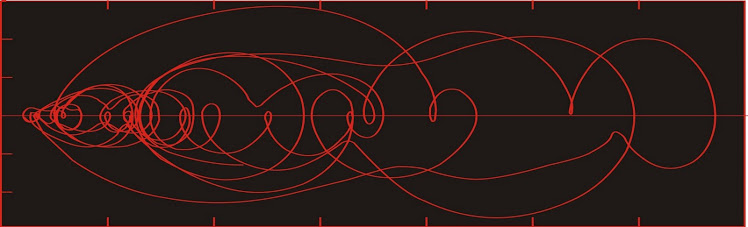
Two dimensional phase space reconstruction of dust flux from the Vostok core over the period 186-4 ka using the time derivative method. Dust flux on the x-axis, rate of change is on the y-axis. From Gipp (2001).
Showing posts with label aggression. Show all posts

Friday, January 6, 2017

Realignment in Asia

Last month, China seized an American drone operating in international waters some small distance from Subic Bay, in the Philippines. China returned the drone shortly thereafter. There was some small amount of diplomatic ranting over the incident, but these things tend not to escalate.

They have been going on for a long time. In the 1980s, Russian ships routinely stole equipment that had been deployed by Canadian research vessels in Canadian waters, most of which were only doing innocuous things like measuring salinity, temperature, and the speed of sound in the water column, much as the Americans' drone is reported to have done.

Of course, even innocuous oceanographic data can have geopolitical implications. There is a lot of speculation that the Chinese were afraid that the drone was to collect information on Chinese submarines. I'm going to go with the American story here--that it was to collect oceanographic information. That doesn't necessarily mean the data was not detrimental to Chinese interests. The question is, what are the Chinese interests?

. . . . . . . . . . . . .

On the Grand Banks, we went from station to station, lowering an instrument at each one, which would be anchored in place. When it came time to recover them, the ship would emit an acoustic signal, which would trigger a cable release and the instrument (which was buoyed) would rise to the surface for collection. On our perambulations, we noticed one or more Russian ships heading to our previous station. When the time came for collection, all the instruments were gone. The Russians had triggered the cable releases and scooped them all up. Rather, that was our interpretation--we weren't close enough to see for certain that they had done this, as the stations were kilometres apart. But no other ships were operating in the area.

We were conducting acoustic surveys as well, including sidescan sonar swaths for mapping the seafloor, as well as profilers and depth sounding. I noticed a number of submarine channels on the Banks--basically underwater fjords--and also noted that their geometry precluded them from being accurately mapped with the instruments we had. In fact there was nothing that we had in Canada that could have done it back in the day, because the issue was not a technical one--it was due to the separation between the instruments we were using and the seafloor. The limitation of standard methods for mapping steeply dipping structures was a significant part of my thesis that I wrote at the time.

In those days, instruments were towed--the umbilical was necessary for power, but towing was difficult from a surface ship through a narrow, and very deep canyon. Particularly when the cost of the instrument was high, and they tended to blow up due to the stresses upon contact with the seafloor. At one time, we had had an instrument that could be towed at a much greater depth, but (as I was told) the Russians stole the prototype in 1981 as it was being deployed, and for whatever reason, the Canadian company that made it didn't make another. (note: I have never found any independent corroboration of this story!!)

Anyway, what could be more innocent than mapping the ocean floor? Well, it turns out that our inability to map these structures properly meant that things near the bottom of the fjords were undetectable from near surface. In those days, antisubmarine detection would be via near-surface towed sonar, which would be ineffective here. Of course, there were other methods that could be used instead, but as long as we Canadians remained ignorant of the existence of these underwater fjords, we would not have the equipment ready to scan them. Does it mean the Russians were preparing an attack? (Probably not--but maybe they would simply like to be the only ones with this information, just in case). Or maybe the Russians were just short of equipment?

There can be a geopolitical element to even innocuous data collection from the seafloor. What threats might the Chinese have inferred from American drones in the South China Sea?

This article suggests the Chinese are worried about Americans tracking their subs. Possible. It's also possible that the Americans are planning for some bit of nastiness involving the Philippines, particularly after Philippine President Duterte's shift towards China. Or maybe they just want the information just in case.

Sometimes, moves like this are meant to send a message. The Americans may want the Philippines to know they are studying approaches to their coastline. The Chinese may want the Americans to know that they are willing to support their new friends.

Thursday, October 23, 2014

The killing will continue until the morals improve

Sad news has come from Canada over the past few days--two separate attacks have killed two Canadian soldiers.

The Harper government has been quick to condemn the attacks as ISIL-inspired terrorism. Unfortunately I am unaware of any investigation that has evidence to support this assertion. It seems likely that the attacks may be characterized as terrorism, but making a definitive statement linking them to a particular foreign group seems likely to skew the result of any investigation. Will the RCMP feel obligated to present conclusions that support the Prime Minister's assertions?

Like all Canadians, I too am saddened by these attacks. But it is important that we learn the truth behind the attacks, and act in a way to reduce their future likelihood. This will probably not mean that we should deport all Muslims; or that we should make Islam illegal; both of which are suggestions I have already heard from other Canadians.

We should not be afraid to investigate the possible role of recent Canadian foreign policy in these attacks. This means that we should ignore all the cries about "blaming the victims". The victims of these attacks are named Nathan Cirillo and Patrice Vincent. Neither the Canadian government nor the Department of Foreign Affairs are victims of this attack--investigating the connection between their actions and the recent appearance of acts of terror (both planned and realized) is not blaming the victim.

We are hearing claims of "radicalization" at the hands of Islamic clerics--but this has not been demonstrated. Nowhere do we hear of the possibility of "radicalization" due to the feelings of hopelessness and despair over injustices committed in our names in the Middle East.

There are many Canadians who are angry at the evolution of Canadian foreign policy, from "honest broker" to whatever it is that we are now. The vast majority of them will never raise their hand in anger against another. Their frustration has mounted, as their voices have gone unheard, and ever-greater acts of aggression are committed overseas in their name.

All over the world, I have seen the same thing. As long as there remains the possibility of peaceful change, peace will reign. But if the system is so heavily skewed that there is no possibility that your opinions will be heard, people eventually turn to violence.

Canada is about to embark on another mission overseas. Canadian soldiers will be placed in harm's way yet again. Some of them may become victims of attacks either here or overseas. The radicalization, one by one, of previously peaceful Canadians at home will also continue.

The killing will continue until the morals improve.

Wednesday, December 4, 2013

There's no terror like state terror

. . . we study the frequency and severity of terrorist attacks since 1968. We show that these events are uniformly characterized by the phenomenon of scale invariance, i.e., the frequency scales as an inverse power of the severity, . . .
                                             Clauset et al., 2007 (pdf)

As we enter this season of peace, I find myself reflecting on war. And scale invariance.

The work cited above is old, and has been digested for some time. To recap, the frequency of terrorist events varies inversely as the square of the severity (typically measured in casualties)--and this relationship is independent of time selected, targets, weapon type, or responsible group. Even massive attacks, such as the September 11 attacks do not represent outliers, but form part of the statistical continuum of "normal" terrorism.


I've extended this graph to include a few other events.


In this chart, D represents recent estimates of the deaths during the Dresden firebombing, N1 represents deaths from the nuclear bombing at Nagasaki, T represents deaths during one particular firebombing raid of Tokyo, H represents deaths from the nuclear attack of Hiroshima, and N represents deaths during the massacre of Nanking.

We commonly carry out similar analyses for the purposes of risk assessments for natural hazards such as earthquakes. If we know the recurrence interval for small events, we can estimate the recurrence interval of very large events, provided the size-frequency distribution is characterized by scale invariance. We can carry out a similar assessment here. Unfortunately, we don't really know the recurrence interval of an event like the September 11 attack--but let us assume here that September 11 represents the largest terror attack one would expect in any 25-year period.

If so, then the recurrence interval for a Dresden would be 2500 years; for Nagasaki, it would be about 7500 years; for Tokyo, about 10,000 years, Hiroshima 15,000 years; and Nanking, about 50,000 years. I note that all of these events happened in the last century.

It seems likely that these state-sponsored events happen on their own frequency curve, which goes to show that nobody can do terror like the modern State.

Monday, May 14, 2012

The futility of scientific secrecy

"We are, I rather assume, going to have a whole series of crises as a result of increasing scientific knowledge that is adaptable to blowing the hell out of the world."  -- David Lilienthal, chairman of AEC, September 1945.
So why do government actions tend to spawn the opposite result of what was intended? We have already seen how forcing down interest rates may have raised unemployment (rather than lowering it), just as raising interest rates three decades ago had the counter-intuitive effect of reducing unemployment.

We now find that banning texting while driving results in a slight increase in accident rates, probably because texting drivers have to hold the their device below normal sightlines and scan for police, in addition to the task of driving.

The international community (by and large) seems determined to keep Iran from developing the technology required to build a nuclear weapon. At first glance this seems a laudable task. But how effective can it be? Not long ago Shimon Peres gave a speech on the futility of restricting scientific advancement. Knowledge can be disseminated by too many routes.

In 1945 American scientists faced a very similar situation. America had successfully tested and then used nuclear weapons against Japan, and while the scientists involved in the Manhattan Project were not permitted to disseminate the knowledge of what they had done to the world, they recognized that muzzling free scientific communication was doomed to failure.

This story is conveyed very nicely in the May 2012 edition of Physics Today, in this article, which is available free of charge.

A group of scientists, who had not been involved in the atomic bomb project, set themselves about duplicating the procedure, and by 1946, had basically succeeded. They attempted to publish their findings in a book. And that's when the trouble began. Among the things the scientists had done is conjectured possible methods of triggering nuclear detonation--which was the idea the AEC most urgently wished to keep secret. The AEC wanted to censor the book--but there was a problem. If they pointed out what they wanted removed, that would send a clear signal to the authors that their conjectures were probably correct. Furthermore, since these scientists had already given a series of public lectures, anyone who had attended the lectures could read the book and deduce which information the AEC viewed as most sensitive. So there really was no way to prevent the most sensitive information on nuclear weapons from being disseminated.

Eventually the AEC did force some material to be censored (the censored material has thoughtfully been made available here as a pdf).

(As an aside, here is my solution--let's say there are 40 ideas in the book, and six of them are sensitive. Toss a coin, or use some other random method to censor, say ten of the ideas, and allow the rest to pass, even if they turn out to be sensitive material.)

Nevertheless, every so often some physics graduate student would read the material that had been published, and from that deduce how to build a nuclear bomb. Assuming that Iranian scientists are at least as smart as American graduate students, they must already have the knowledge to build a bomb. Assassinating nuclear scientists is futile, and merely establishes a precedent for assassinating scientists engaged in scientific endeavours that might be inconvenient to your country. When American (or, perhaps, Israeli) scientists start dying mysteriously we will know that some form of international parity has been realized.

Saturday, April 9, 2011

Book review: G. Friedman's The Next Hundred Years

I have been going through George Friedman's book "The Next Hundred Years". It is a painful process. I find the book to be flawed on numerous levels, mainly by the intellectual limitations implied by Friedman's axiomatic geopolitical views. Nevertheless, there are some interesting points made, some of which are perhaps more interesting than the author intended.

In the book Friedman uses a series of logical arguments to predict geopolitical developments over the next century. This is a common approach in the social sciences, which distinguishes them from the natural sciences. The social sciences argue that they do not have the luxury of conducting experiments in the lab, which forces them to study their problems using formal systems.

There are natural sciences in which experimentation is similarily impossible. Paleoclimatology, historical geology, evolutionary biology--all of these involve trying to draw conclusions about complex systems on the basis of limited observations. It is very difficult to draw conclusions, and impossible to make predictions; but whenever there have been problems in these sciences, they have arisen by a reliance on axioms (e.g., increased CO2 necessarily leads to warming).

A logical (or formal system) is characterized by its rules of inference, its axioms, and its definitions. All of these characteristics serve as irreducible statements, which must be assumed true. They cannot be proven to be true. If you reject the assumptions, you reject all the conclusions. Any flaws in the axioms will be carried through to the conclusions.

Friedman defines civilization as the state achieved by a culture making itself open to the ideas of other cultures. He further defines barbarism and decadence as intervals in which the culture closes itself to external ideas; the first before they have become civilized, the second, afterwards.

I have seen better definitions of civilization elsewhere--principally, civilization involves division of labour, leading to surpluses, a portion of which is used to improve one's own standard of living and a portion of which is used to build something for the future--whether it be temples, roads, bridges, factories.

I would argue that a civilized people save and invest in future-oriented development rather than simply consuming their wealth. (This idea comes from a delightful article which argued that the very pinnacle of civilized behaviour is the making of port, which appeared on Lewrockwell.com, but which I am currently unable to find). Under barbarism, surpluses are consumed. In this schema, decadence might be the state of barbarism in which a formerly civilized people consume not only all of their own surpluses, but also the capital accumulated and built by their more civilized forebearers.

Friedman argues that cultures start off as barbaric, become civilized, and then decadent. He believes that America is still in its barbaric phase, and will become civilized sometime in the next century. Although I find this a charming scenario, I have to disagree. By the definition I have used, America was civilized in the past two centuries, when it built its infrastructure and factories. Currently consumption dominates the economy; and as formerly paved roads are being torn up and replaced by gravel (as it is cheaper to maintain); as areas of major cities have services eliminated by cities which can no longer afford to provide them--America is clearly in the state of decadence.

America's decadence is driven by the excessive rewards given to financial engineers relative to civil engineers. If you were a bright fellow, there are far more rewards in the financial services industry (hedge fund manager etc.) than in manufacturing, mining, or other productive enterprises. But decadence need not be forever. Cultures can revitalize themselves by expanding their efforts to build for the future. Hopefully this will happen in America this century. In fact I think it likely will, once the current economic system completes its apparent collapse.

Back to Friedman. Two axioms really stand out in his early arguments.

1) Economic power flows from military power.

2) War is inevitable, so long as humans act in their own interests.

Observation suggests flaws in the first two assertions. First of all, it is a virtual certainty that it is military power which flows from economic power, rather than the reverse. Invading and plundering your more prosperous yet peaceful neighbours only works for so long. The plunder will not likely lead to lasting economic power, and you either run out of prosperous neighbours or else they arm themselves.

Great economic power makes it possible to become a great military power. If military power created economic power, than the Soviet Union would have had a much stronger economy. 

I would also argue that war does not arise inevitably from competing human interests. For instance Mr. Chu, who runs the corner store down the street, and I have differing interests, but we do not need to fight. As my time-money preferences vary, sometimes I will agree to pay Mr. Chu's prices, and other times I will walk a few more blocks to the grocery store. Most people recognize that there is more to be gained by mutually agreeable trade, which adds value, than through war, which consumes and destroys capital.

(You may wonder why I kept reading this book. Well, truth to tell, our compound here in Ghana has recently suffered a direct lightning strike, blowing up the TV, greatly limiting my entertainment choices. And bandwidth being what it is, at least books are available).

Given the difficulties I have with his axioms and definitions, it is unlikely I would agree with his conclusions. Nevertheless, some do appear to be viable.

Friedman expects Turkey to become a significant regional power. I agree.

He expects China to stumble and break up. I agree that there may be a stumble, particularly given their demographic problems, and agree that there is a chance that the economic disparity between urban and rural populations will strain the country, but think that the probability of China breaking up is less than Friedman projects. I see no reason why China's future stumbles should be worse than America's early economic stumbles.

Friedman expects Japan to become the dominant Asian power. I disagree, as their demographic situation is the worst in the world (except possibly for Russia). With their general lack of resources and impending demographic collapse, they are in the midst of significant decline.

He expects America to be the dominant global power throughout the next century. I don't agree because the economic and regional disparities make America about as likely to break up as China.

Friedman believes that the conflict between the US and the jihadists (sic.) is nearing its end, as America has nearly achieved its strategic objectives. At first glance, this statement seems to be completely at odds with reality. Despite talk of winding down its military operations in Iraq, the sheer size of the bases and US embassy there suggest that the military will continue to operate there in large numbers. As their simple presence in Iraq generates more enemies, they will never cease combat operations in Iraq until they completely withdraw from the country. Yet it is their presence in Iraq which is their strategic objective.

But this view presupposes that American foreign policy has the goal of establishing order in Iraq (or Afghanistan, or Libya, etc.). Friedman asserts that this is not America's goal. In what is the most useful bit of information gleaned from this book, he asserts that America's actual goal is to sow chaos and confusion throughout Eurasia in order to ensure that no other global power arises. While I find this a nearly perfect explanation for American foreign policy in the region, I question his assertion that it is "right" for a global power like America to condemn many millions of people to lives of poverty and conflict.

He states that Al-Qaeda has comprehensively failed in its strategic objectives, which he claims are to weaken US influence enough in the Middle East so that US-friendly regimes like Egypt, Tunisia, etc. would overthrow their governments. Never gonna happen in a hundred years, according to Friedman. Actually it only took two (once they allied themselves with Ben Bernanke).

As I recall, Bin Laden stated Al-Qaeda's objectives as threefold: 1) expulsion of US forces from Saudi Arabia (not necessarily US influence over the leadership); 2) resolution of the Palestinian situation; and 3) higher oil prices. They have achieved goal 1, and made progress on goal 3 (I believe his target was $300 per barrel--so I would not classify their actions as a strategic failure. In fact they have done remarkably well, given the imbalance in power between the two adversaries.

Friedman has a lot more to say in the later chapters about Russia; inevitable wars between America and major regional powers (which would not be necessary if the US didn't keep a finger in every pie) and a demographic/economic showdown with Mexico. I am afraid that I have to classify much of the book as wishful thinking rather than hard analysis.

Sunday, February 27, 2011

Image of Musson and Passat off Newfoundland

As related here, the ships Passat and Musson were research vessels used by the Soviet Union to find suitable locations for hiding nuclear submarines on the Atlantic margin of North America.


Musson about to enter St. John's harbour in late June, 1986. The main thing
I remember is that they refused to allow the harbour pilot aboard.


Stern view of the Passat in St. John's harbour in early June 1986.

Thursday, January 6, 2011

Science—the new frontier for State aggression in the geopolitical age

You remember the events of two years ago, when an American vessel ran afoul of some Chinese “fishing vessels”. The USNS Impeccable, an ocean surveillance ship, was monitoring submarine activity south of Hainan in March 2009, when numerous Chinese vessels began to shadow and harass it. The Impeccable replied with water cannons.

A similar incident happened to the USNS Victorious in May 2009.

Much was made of the unarmed nature of these vessels. But look at their pictures.

There seem to be a few odd pictures in the above link.

Arguments have been made by both sides as to who was in the wrong, and it may be that under the UN Law of the Sea that the American Navy had a right to carry out its operations within the Chinese Exclusive Economic Zone; but I had to applaud the Chinese for trying to stop these vessels from their mission.

It is disingenuous to carry out work which is clearly aggressive, and then deny it by saying you are permitted to do so. Hunting for submarines in a section of the ocean far, far, away from your own could indeed be considered to be an act of aggression.

But what if the vessel were actually an oceanographic survey vessel? Could something as noble as gathering scientific data be considered an act of aggression? Let's consider.

Russians on the Grand Banks

In June of 1986 I was a member of the scientific staff on board the CSS Hudson, a Canadian oceanographic vessel (now called the CCGS Hudson).


CSS Hudson enters St. John's harbour May 1987 with surviving crew 
members of the Skipper 1. Photo by me.

The mission involved mapping and exploration of the seafloor on the Grand Banks through a combination of sidescan sonar and seismic profiling, combined with core collection. We sailed from St. John’s, tailed by a Russian oceanographic vessel called the Passat. During the entire mission, the ship (or another like it) would appear near the horizon, but always stayed several km away.

Composite image of the Musson, docked in St. John's harbour in late 1987 
(about sixteen months after the events of this story). Photos by me.

Officers on the Hudson commented that Russian oceanographic vessels were on the Grand Banks at least 300 days a year. By contrast, Canadian research vessels surveyed the Grand Banks for less than 30 days per year.

One of the scientists on board related how the Russians used to steal ocean monitoring devices left behind by Canadian vessels. The instrument package was attached to a weight by a cable with an acoustic release. The instrument package had a float, so when the acoustic release was triggered, the package would float to the surface. On the cruise in question, the scientist observed the Russian ship always near the horizon, passing over locations where the instrument packages had been placed. When the Canadians went back to pick up their instrument packages, they were all gone.

There were other stories of how during testing of one of the later Huntec systems, the prototype of a newer form of their deep-towed system, the ship was surrounded by Russian trawlers and other vessels, some with nets deployed, and the equipment was lost. This event supposedly happened in April 1981.

The Russians (when they weren't stealing or sabotaging equipment) could have been carrying out innocent scientific research. What research could that include?

There is a long history of collecting weather data in the North Atlantic for the purpose of forecasting for Europe. Weather collection could be for civilian or military purposes.

What about seafloor mapping? A noble endeavour, no?

On this 1986 cruise, we mapped out several submerged fjords, at the edge of the continental shelf. The internal geometry of these fjords was very interesting, but it was clear that our instruments were unable to image the walls or bottom of the fjord accurately. 

There was nothing unusual about this--the distortion is a function of the geometrical relationship between instrumentation towed near the surface and the relief of the seafloor. Basically, the greater the distance between the sonar and the seafloor, the less representative the sonar returns were. Over most areas, where the seafloor is relatively flat, this wasn't a problem. But where the seafloor is very rugged, the distortion may be significant.

In the case of our undersea fjords, our instruments were incapable of seeing the bottom, because of reflections off surface irregularities in the walls of the fjords. This can only be overcome by towing the sonar within the fjord close to the bottom. 

There is a correspondence between the type of sonar we were using and the type used by, say, a destroyer looking for a submarine. If our sonar is unable to see to the bottom of the fjord, the same will be true of the standard anti-submarine sonar. Mapping the location of these things could come in handy if you were looking for a place to hide, say, nuclear submarines on the edge of the continental shelf of some future adversary.

Soil cadmium and Canadian wheat

In 1994 I was about to carry out an exploration program in Northern Ontario for a Canadian mining company. The program was a large-scale reconnaissance project bent on recovering diamond indicator minerals from glacial till, but the samples were to be assayed geochemically for various elements of interest. I decided to discuss sample location distributions with a friend of mine at the Geological Survey office in Ottawa.

At the time the GSC had recently completed a soil survey over western Canada, and were still compiling the results. But one issue in particular was causing a great deal of grief.

The European Union was proposing to decrease the acceptable levels of cadmium in all wheat imports. Cadmium is a metal, and like all metals is toxic in sufficiently high doses. Unlike many metals, however, cadmium is not necessary for human life, and as it can accumulate in tissues in the body, it makes sense to reduce your intake. But to suspicious eyes (most of which were Canadian), the proposed cadmium restrictions appeared to be very carefully selected to exclude Canadian durum wheat from the European market while not excluding Russian wheat.

Part of the reason for the GSC survey was to try to find the source of the cadmium. The results were discouraging. It appeared that the cadmium had been spread by glaciers after advancing over a particular black shale unit in the Manitoba escarpment. Since the cadmium was natural, and spread all over the Canadian plains, there was no feasible remediation. (although see this for some recent progress).

There was initially a lot of crying over the cadmium in Canadian wheat issue. But the Canadian government came up with a brilliant plan. In March 1995 they began siezing Spanish trawlers fishing at the edge of the EEZ. There was a great to-do, climaxing with Brian Tobin's tour of New York with a Spanish turbot fishing net. In the aftermath, the whole cadmium issue disappeared, and there was a signed agreement regarding fishing stocks that straddle lines of jurisprudence.


This is more my speed nowadays. Fishing off the coast of Ghana. Photo by me.