Dust flux, Vostok ice core

Dust flux, Vostok ice core
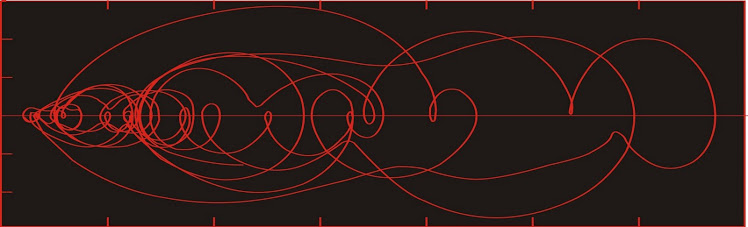
Two dimensional phase space reconstruction of dust flux from the Vostok core over the period 186-4 ka using the time derivative method. Dust flux on the x-axis, rate of change is on the y-axis. From Gipp (2001).
Showing posts with label science. Show all posts

Monday, May 14, 2012

The futility of scientific secrecy

"We are, I rather assume, going to have a whole series of crises as a result of increasing scientific knowledge that is adaptable to blowing the hell out of the world."  -- David Lilienthal, chairman of AEC, September 1945.
So why do government actions tend to spawn the opposite result of what was intended? We have already seen how forcing down interest rates may have raised unemployment (rather than lowering it), just as raising interest rates three decades ago had the counter-intuitive effect of reducing unemployment.

We now find that banning texting while driving results in a slight increase in accident rates, probably because texting drivers have to hold the their device below normal sightlines and scan for police, in addition to the task of driving.

The international community (by and large) seems determined to keep Iran from developing the technology required to build a nuclear weapon. At first glance this seems a laudable task. But how effective can it be? Not long ago Shimon Peres gave a speech on the futility of restricting scientific advancement. Knowledge can be disseminated by too many routes.

In 1945 American scientists faced a very similar situation. America had successfully tested and then used nuclear weapons against Japan, and while the scientists involved in the Manhattan Project were not permitted to disseminate the knowledge of what they had done to the world, they recognized that muzzling free scientific communication was doomed to failure.

This story is conveyed very nicely in the May 2012 edition of Physics Today, in this article, which is available free of charge.

A group of scientists, who had not been involved in the atomic bomb project, set themselves about duplicating the procedure, and by 1946, had basically succeeded. They attempted to publish their findings in a book. And that's when the trouble began. Among the things the scientists had done is conjectured possible methods of triggering nuclear detonation--which was the idea the AEC most urgently wished to keep secret. The AEC wanted to censor the book--but there was a problem. If they pointed out what they wanted removed, that would send a clear signal to the authors that their conjectures were probably correct. Furthermore, since these scientists had already given a series of public lectures, anyone who had attended the lectures could read the book and deduce which information the AEC viewed as most sensitive. So there really was no way to prevent the most sensitive information on nuclear weapons from being disseminated.

Eventually the AEC did force some material to be censored (the censored material has thoughtfully been made available here as a pdf).

(As an aside, here is my solution--let's say there are 40 ideas in the book, and six of them are sensitive. Toss a coin, or use some other random method to censor, say ten of the ideas, and allow the rest to pass, even if they turn out to be sensitive material.)

Nevertheless, every so often some physics graduate student would read the material that had been published, and from that deduce how to build a nuclear bomb. Assuming that Iranian scientists are at least as smart as American graduate students, they must already have the knowledge to build a bomb. Assassinating nuclear scientists is futile, and merely establishes a precedent for assassinating scientists engaged in scientific endeavours that might be inconvenient to your country. When American (or, perhaps, Israeli) scientists start dying mysteriously we will know that some form of international parity has been realized.

Tuesday, May 8, 2012

Unconquerable science

. . . says Shimon Peres in a speech delivered today in Ottawa, as reported here.
Science has changed global governance and can be neither conquered nor defended by armies, Israeli President Shimon Peres said today. His opening remarks to a round table discussion on education and innovation at Rideau Hall drew obvious parallels to Israel's current fears of Iranian nuclear development.
But does it really? He appears to be saying (we are waiting for full text of his remarks before passing full judgement) that information travels freely, without borders. If so, any attack on Iran calculated to keep her from developing nuclear technology would be fruitless.

I am a bit curious as to the exact target of his remarks. He is an old shrewd man--is he calling out Harper?

Thursday, January 19, 2012

Why geology (also economics) cannot be a branch of physics

I have been working my way through a new paper by Ellison et al. (2012), from the same group that brought us epsilon machines.

In this paper the authors investigate systems which lie between those governed by classical mechanics (which are reversible, and both their past and future are easily divined from present observations assuming we know the equations of motion) and thermodynamic systems (the past of which, once in equilibrium, are fundamentally unknowable); which could be to say, systems which lie between physics (undergraduate, at any rate) and chemistry.

Systems for which our observations are incomplete, and which are characterized by extreme sensitivity to initial conditions are the focus of the paper. These systems are stochastic.

At this my ears (or maybe my eyes) perk up--we have been looking at just these sort of systems in the course of this blog.

The key insight in the paper is the potential for irreversibility in such systems. Irreversibility, in this case, means that the computational effort of prediction (forecasting the future) and retrodiction (modelling the past) are not equivalent. For these systems, it is insufficient to characterize the forward time-evolution of the system--one must also characterize the backward time-evolution as well; otherwise its description is incomplete.

These characterizations are built through Markov chain analysis, leading to an epsilon-machine construction. A reversible process is one in which both the forward-evolving and backward-evolving epsilon machines are identical.

In an earlier post, I constructed epsilon machines for early Quaternary paleoclimates using as predictive states the high-probability ice volumes A1, A2, and A3, from probability density plots like the one below:


Probability density for reconstructed phase space portrait of global ice 
volume proxy from 1700 to 1550 ka.

In the above diagram, A1 represents an interglacial condition (much less ice than at present), A2 was an intermediate glacial condition (comparable to what we call an interglacial state today), and the maximal glacial state A3, which here in the late Quaternary would only be considered a mild glacial state.


These states were defined from the probability density plots of reconstructed phase spaces way back when I was still using a window of length 270 ky. More recently I have reconstructed phase space for global ice volume with a window length of only 150 ky, but haven't transcribed all the state changes yet.

In retrospect, I could have placed the border between α1 and α2  in a different place than I did in the figure above. As a demonstration, I shall leave things as they are.

Of the three epsilon machines depicted, α2 and   α3 are reversible, whereas α1 is not. The sequence of states in α1 was as follows: A2-A3-A1-A3-A2-A3-A2-A3-A2-A1. The probability computed for the arrow from A2 to A3 is the probability that A3 occurs given A2; which we find by observing all occurrences of A2 (4) and counting the number of them that are immediately followed by A3 (3), for a probability of 0.75. The other probabilities are calculated in a similar fashion.

To time-reversed epsilon machine is constructed the same way, but with the states in reverse order: A1-A2-A3-A2-A3-A2-A3-A1-A3-A2. The structure will appear to be the same, but the probabilities of each transition will differ.


The tilde (~) over the α1 tells us that this is the time-reversed epsilon machine. We note that it is not the same as α1.

The Mid-Quaternary epsilon machine appears to be irreversible.


The general structure of the forward and time-reversed version of α4 are similar. The Markov chain was short, beginning with A1 and ending with A4. The reversed version, therefore, has one more A4 and one less A1 than the forward version, and it is this difference that explains the changes in probabilities for the different transitions. Hence, α4 may actually be reversible.

The late Quaternary epsilon machine appears to be irreversible.


We recognize these as being irreversible because the backward evolving epsilon machine is different.

The goal is to then combine the forward and reverse models into a single bidirectional model (Crutchfield et al., 2009; Ellison et al., 2009). I haven't figured out how to do that yet.

Consider for a moment the reconstructed phase space portrait for the Case-Shiller index of house prices.


Defining causal states by a similar process as for the global ice volume proxy, we would see something like "BAB?"--with the question mark referring to the ongoing excursion generated by our friends at the Federal Reserve. It isn't really a long enough string to do any interesting Markov chain analysis or to construct an epsilon machine. We just haven't seen enough Fed intervention* to devise a predictive model.

Well, my homework now is to figure out the business of constructing the bidirectional model, and how to calculate the difference in entropy between the forward and backward process.

*On the other hand, I think we have already seen quite enough.

References

Crutchfield, J. P., C. J. Ellison, and J. R. Mahoney. Time's barbed arrow: Irreversibility, crypticity, and
stored information. Phys. Rev. Lett., 103(9):094-101, 2009.

Ellison, C. J., J. R. Mahoney, and J. P. Crutchfield. Prediction, retrodiction, and the amount of information
stored in the present. J. Stat. Phys., 136(6):1005-1034, 2009.

Ellison, C. J., J. R. Mahoney, R. G. James, et al., 2012. Information symmetries in irreversible processes. on arxiv (waiting for official publication)

Monday, June 6, 2011

Modeling and the axiomatic approach to science

I have previously written on the problems that arise from taking an axiomatic approach to science.

To review once again--science proceeds through the testing of falsifiable hypotheses, which, if falisified, are rejected. If numerous attempts to falsify an hypothesis fail, we begin to accept that the hypothesis explains some set of observations, and this explicatory power moves into the scientific pantheon as a theory.

The axiomatic approach is quite different than the normal scientific approach of testing hypotheses. The question today is whether the modeling approach lends itself to hypothesis-testing or is purely deduction from axioms. My interest in this question stems from the recent GAC symposium on "Earth climate: past, present, and future", moderated by Dr. Andrew Miall.

Our question today concerns climate modeling. Is it inherently axiomatic (i.e., based on non-falsifiable non-reducible logical statements)? Arguments in favour of this view include: 1) whereas an inductive scientist may admit a relationship between a pair of parameters, once the relationship is included in a deterministic model, that relationship is quantified; 2) once the relationship between two parameters is quantified, that quantification tends not to change unless challenged by specific observations compared to the model; 3) specific comparisons usually cannot be used to test any one particular quantified relationship in a complex model--there are ambiguities; 4) the models (here I am specifically looking at GCM models) tend to be very difficult to test, as the required simultaneous observations are difficult to come by.

The Thursday morning session was contentious, with talks by Ian Plimer, Jan Veizer, Hans Svensmark (pre-recorded, unfortunately), each of which could be construed as "climate denying". These talks focussed on points or particular weakness in the climate warming arguments, particularly the effects of solar and cosmic effects on climate. Interestingly, the Svensmark talk dealt with very long-term effects (140 my time-scale), which may be reflected in the 28 My cyclicity in mass extinctions Raup and Sepkoski's work on mass extinctions.

[If the extinctions are instead related to the passage of the solar system through relatively denser portions of the galactic arms (140 my cyclicity), and if extinctions were related to this event (instead of Nemesis), the spectral power observed in the 28-my periodicity could be explained as a harmonic of 140-my cyclicity.]

Norman Kalmanovitch discussed observations of the blackbody radiation escaping from the Earth increasing in tandem with warming, suggesingt that warming is externally driven rather than due to enhanced trapping of heat by greenhouse gases (whereupon one would expect escaping radiation to decrease with warming).

The theme of solar influence on climate continued in the afternoon session. Important points of the afternoon session were that the Little Ice Age was not entirely a European phenomena, but appears in paleoclimatic records of other disparate areas around the world; and climate models tend to overestimate the variation in temperature.

The audience was much smaller for the Friday morning session, which dealt mainly with paleoclimatic records.

The first two talks of the session showed the importance of realistic understanding of future climate change, as accurate predictions of future thickness of the ice roads that service several diamond mines in the Northwest Territories of Canada has a clear economic impact.

My talk was largely a reiteration of previous posts.

The last talks dealt with earlier portions of the global record.

The debate which followed was enjoyable but one-sided. As commonly happens, potential participants to these conferences draw their cues from the moderator and the list of talks, and those with a pro-IPCC viewpoint basically stayed away from this session.

On the basis of the geological record, it is reasonable to conclude that increasing atmospheric CO2 will lead to increased global temperature. How much of an increase is the question.

Even as you construct a climate model, you may be aware that there is a large range of possible values expressing this correlation. But when you create a model, you must select a value, even if you don't really believe it. You may not strongly defend your choice of parameter. But if your model becomes famous, and a lot of other people begin to use it, then you defend the model vigorously, not so much because your own reputation is at stake, but rather the reputations of all of your followers. This is the influence of the human condition on the scientific method.

Tuesday, May 10, 2011

Geopolitics and Economics: Cloaking evil in a mantle of scientific respectability

I have written before about Economics and how it differs from the hard sciences.

The hard sciences are predominantly inductive, premised on the repeated testing of hypotheses, which are discarded if they are disproven. The social sciences, especially Economics and Geopolitics are largely axiomatic--based on logical development of premises.

It doesn't have to be this way. It's just the way it is practiced.

The political geographers argue that there is a fundamental difference between, say, geopolitics and chemistry. Geopolitics, they argue, is not reducible to a test tube. You cannot rerun human history from the beginning while changing events (having the Axis win WWII, for instance) to see how things turn out. It is argued that as geopolitical theory has failed to advance our understanding of international relations, and even to generate testable hypotheses, it should be relegated to the periphery of political thought. Nevertheless, people like George Friedman continue to hype geopolitical theory as a guide for US foreign policy.

The notion of testable hypotheses is so fundamental to science that it is impossible to argue you are practicing science if you aren't using them.


Is it that testable hypotheses don't work for these type of sciences? Or are testable hypotheses difficult to formulate, and frustratingly enough, rarely have anything to do with any of the problems that need solving?


It's science. Move along.

Can testable hypotheses exist in the geopolitics?

I would argue that they can, and do. There are hard sciences which are essentially historical as well--fields like paleoclimatology, and evolutionary biology, which are predominantly much like the social sciences--you can't rewind history and run it again with some controlled changes. These sciences have been built upon a foundation of numerous testable hypotheses, admittedly some are a little limited and there is no question that there is a great deal of scientific frustration at our limited understanding of the Earth systems--however, progress does occur. It is true that grand hypotheses concerning the fundamental operation of the Earth's climate system are lacking--but there are plenty of testable hypotheses. Even so, we are constantly beset by unpredictable disasters.

In Economics, I would argue a similar situation exists. There are numerous testable hypotheses concerning the connections between variables in the economic system, but grand hypotheses about the overall workings of the economy are hard to formulate. This is no justification, however, for geologists have the same problem--nevertheless they proceed in a scientific fashion.

Is there no way to generate testable hypotheses in historical sciences?

I agree that generating testable hypotheses in a complex system is challenging.

Two of the prominent social sciences which purport to understand the way the world works are Geopolitics and Economics. These are of import due to their role in setting (or at least appearing to set) both the economic policies and the foreign policies of major governments.

Geopolitical theory is an attempt to explain the impact of physical geography on political systems.It is tied to the notion of economic and military strength being controlled by size of land mass, available natural resources, and means of approaching and traversing the territory. Economic theory is currently dominated by Keynesian policies, which are pitched by governments around the world as the only approach to operating a modern economy.

The "science" of Geopolitics, according to G. Friedman in his book, "The Next Hundred Years" stipulates that one of the world's great powers must arise in Eurasia because of the size of the landmass and its resources. This is purported to be the reasoning behind the "Great Game" and much of the history of meddling in Afghanistan. The internal logic of geopolitics has driven such acts as the invasion of Afghanistan by the British, Russians, and Americans; the invasion and destruction of Iraq; possible invasion or destruction of Iran; and carving up the Ottoman Empire into divided, squabbling countries. The old Soviet Union was driven to search for suitable locations for launching nuclear attacks against its enemies in North America; just as the United States has done for its enemies in China.

Fettweis (2006) writes:
Social scientists look skeptically upon research programs that use conjecture as the primary support for their conclusions. Evidence from neither present nor past state behavior could help demonstrate the validity of the future-oriented theories of geopolitics . . . [G]eopolitical scholarship has often been merely thinly disguised expressions of parochial national interests or strategic recommendations for individual states masquerading as science.
If we allow ourselves to be seduced by the idea that geopolitics is a purely explicative science, the explanations of which cannot be judged on moral grounds any more than could be the boiling point of water; then we do not allow ourselves to perceive that these actions are wholly evil, predicated as they are on the necessity of destroying lives and capital.

Similarly, the conclusions drawn by economic "science" are that we should keep the current economic system as is, regardless of the damage done to the real economy (involved with the making of real things). Keynesian policies have resulted in the creation of enormous amounts of credit, all to fund government programs which for political reasons could not be funded through taxation. Keynesian theory prescribes some desirable (non-zero) rate of inflation combined with a zero-interest-rate policy. The end result is the theft of purchasing power from the savers of society. In the absence of the economic "science", we would recognize this for a grand act of immorality--a crime committed against savers. But under the cover of economic "science", it becomes a necessary act, as free from moral judgement as the boiling temperature of water.


The immoral acts of government are presented as being scientifically necessary. Science, after all, is not governed by morality. However, there is a difference between economic or foreign policy and chemistry--economic policies are policies of choice. We can choose to raise interest rates. We can choose not to attack Iran. We can't choose the boiling temperature of water. Do not become confused over what is and is not a science, or you will awake to find Genghis Khan your Minister of Peace, and Kwame Sikani the governor of your central bank.

Reference

Fettweis, C. J., 2006. Examining the Chessboard: A Disappointing Century of International Political Geography. US Naval War College December 2006, 43 pp.

Sunday, February 13, 2011

Crying over spilled milk and other stories

Partially in response to the BP oil spill of last year, the EPA is apparently instituting rules to treat milk spills, as milk also contains oils.

The mission to make everyone safe no matter what the cost is back on track.

Here at the World Complex we believe in being prepared. Although the current rules are proposed for American farmers only, it is only a matter of time before the rules are extended to other countries and to households, where most milk spills actually occur.

Therefore we have acquired a Dedicated Omnivorous Guardian (DOG) to clean up household milk spills. The DOG practically begs to carry out his duties.


- - - - - - - - - - - - - - - - - - - - - - -

Elsewhere, the EPA has recently decided that perhaps there is too much fluoride in drinking water.

I smell a government admission of guilt coming on. Maybe the US government will have to pay a settlement to Americans.

The World Complex humbly  proposes a democratic, across-the-board settlement of $10,000 per person for all US citizens.

In order to pay for this (the US deficit being too large as it is), we humbly propose a $11,000 head tax on all US citizens (the extra being used to cover the costs of administering the program). It will be painful, but imagine how delightful it will be to receive the above settlement!

Monday, January 24, 2011

Science—the new frontier for State aggression in the geopolitical age part 2: State aggression against individuals

Our last installment dealt with state aggression against other states. Today's installment will introduce the incredibly vast topic of state aggression against individual rights, a topic covered by numerous sites including Pro Libertate, Lew Rockwell, and others too numerous to list.

The most difficult problem facing the individual victim of state aggression--particularly in democracies--is the sense that any resistance is illegitimate. The problem is commonly worsened by the fact that the State will often refer to some scientific evidence as "proof" that you need protection from some entity or action. Opponents to State policies are, therefore, irrational as well as illegitimate.

The following is a partial list of State policies which are backed by scientific studies, against which any protest is considered both irrational and illegitimate:

Fluouridation of drinking water (in North America)
Composition of the food pyramid
Global warming
Mass vaccination of children
Approval of aspartame
Encouragement of statin drugs
Widespread use of dental mercury fillings
Use of fiat currency
Approval of GM foods

The discussions below are really brief and are not intended to be full treatments of the subject matter.

Fluoridation of water

The fluoridation of water has been proposed to reduce cavities in populations. Opposition to the fluoridation of water is based on ethical grounds (the difficulty for individuals to opt out of the program, lack of informed consent, and the lack of control over dosage); efficacy (it is proposed that fluoride should be applied topically to teeth rather than being ingested); and on health grounds (ingesting fluoride may be unhealthy).

Many Western Europoean countries oppose fluoridation of water for the reasons listed above.

The position taken by typical health officials in North America is reflected in this statement by the former Medical Officer of Health of the City Waterloo, "Every reputable scientific authority throughout the entire world strongly advocates the addition of fluoride to the water." Such a statement is tailor-made to discredit any attempt to oppose the concept of fluoridation.

By contrast, the statements made in position documents of DVGW in Germany question the above statement. They do not specifically discount the effect of fluoride on cavities, but do argue that the additional possible medical, ethical, and environmental costs of fluoridation cannot be justified. 

Food pyramid

I remember reading an article many years ago in which a Canadian nutritional researcher stated she was forced out of her position because she claimed that the food pyramid did not reflect the actual nutritionists' advice, but was largely shaped by commercial interests. Unfortunately, I have been unable to find this story again--it is gone into the memory hole.

There are articles by Dr. W. Willett of the Harvard School of Public Health arguing for substantial modifications to the food pyramid, including reducing grains and increasing the amount of fats (albeit plant oils) in the recommended diet.

Global warming

I hardly even want to talk about this one. Suffice to say there is a tremendous amount of emotionally charged debate on both sides and ridicule for anyone who dares contradict official pronouncements. Do your own due diligence.

Mass vaccination of children

The number of different vaccinations recommended for children has ballooned over the past several years.

Each of the new proposed vaccines has one or more scientific studies supporting it. Each vaccine, in isolation, may provide a benefit with a reasonably low risk. What is less well-known is the cumulative effects of the large number of vaccines that very young children receive.

In addition, there are reasons to oppose this increase in vaccination. Such arguments include (but are not limited to) the effects of mercury-based preservatives on neurological development; the relationship between vaccination and autism (which may have been refuted); the serious side effects of the flu vaccine, among others; and the effects on the developing immune system of a massive wave of vaccinations.

Approval of aspartame

Aspartame is one of the most widely used artificial sweeteners on the market, yet its original approval for commercial use by the FDA was heavily contested. Searle (now part of Monsanto) won the day thanks to Donald Rumsfeld's influence, who some say should have a metabolic disorder named in his honour.

In the early 1990's, lab technicians at the lab above mine at University of Toronto reported that rats showed terrible toxic responses to moderate doses of aspartame. One day one of the grad students at the lab in question told me that they had been threatened with immediate loss of all research funding unless they stopped working on aspartame.

Statin drugs

Statins are used to reduce cholesterol. In your blood tests, cholesterol is divided into two types; the high-density lipoproteins (HDL) and the low-density lipoproteins (LDL). Simplistically, HDL is referred to as "good" cholesterol and LDL is "bad".

Even within the "bad cholesterol" there are two distinct types--pattern A, which consists of larger and less dense LDL particles, and pattern B, consisting of smaller and denser LDL particles. Of the two, only pattern B is associated with elevated risk of coronary disease, but the cholesterol blood test is unable to distinguish between the two.

Doctors normally recommend any patient with elevated LDL to take statins. The actual level of LDL that is considered to be elevated has fallen over the past decade, meaning that the number of people recommended for statin therapy has similarly increased. But simple blood tests are unable to distinguish between pattern A and pattern B LDL, so patients are asked to risk serious side effects to take a drug that may not actually be necessary.

Science and public policy

As I mentioned above, once a public policy is backed by science, it becomes illegitimate to protest it. What makes this dynamic particularly troubling is that there is a reinforcing dynamic between government and research labs whereby the labs are encouraged through receipt of government funding to produce results which favour government policy. Additionally, certain large industrial interests also fund research which favours usage of their products (whether they be agricultural, pharmaceutical, or military).

Even if researchers begin to produce results at odds with the scientific consensus, it can be difficult to bring about lasting change.

Update: January 25

Here is another article that makes the same point

Monday, October 11, 2010

Resignation over disgust at global warming

I have already tried to make the point of easy funding drawing scientific effort towards the problems, and ultimately the conclusions desired by the funding authorities. 

I hate to say I told you so, but . . .

Here is Dr. Harold Lewis , emeritus professor of physics at UC Santa Barbara, and a giant in his field, resigning from the American Physical Society.


Dear Curt:
When I first joined the American Physical Society sixty-seven years ago it was much smaller, much gentler, and as yet uncorrupted by the money flood (a threat against which Dwight Eisenhower warned a half-century ago). Indeed, the choice of physics as a profession was then a guarantor of a life of poverty and abstinence—it was World War II that changed all that. The prospect of worldly gain drove few physicists. As recently as thirty-five years ago, when I chaired the first APS study of a contentious social/scientific issue, The Reactor Safety Study, though there were zealots aplenty on the outside there was no hint of inordinate pressure on us as physicists. We were therefore able to produce what I believe was and is an honest appraisal of the situation at that time. We were further enabled by the presence of an oversight committee consisting of Pief Panofsky, Vicki Weisskopf, and Hans Bethe, all towering physicists beyond reproach. I was proud of what we did in a charged atmosphere. In the end the oversight committee, in its report to the APS President, noted the complete independence in which we did the job, and predicted that the report would be attacked from both sides. What greater tribute could there be?
How different it is now. The giants no longer walk the earth, and the money flood has become the raison d’être of much physics research, the vital sustenance of much more, and it provides the support for untold numbers of professional jobs. For reasons that will soon become clear my former pride at being an APS Fellow all these years has been turned into shame, and I am forced, with no pleasure at all, to offer you my resignation from the Society.
It is of course, the global warming scam, with the (literally) trillions of dollars driving it, that has corrupted so many scientists, and has carried APS before it like a rogue wave. It is the greatest and most successful pseudoscientific fraud I have seen in my long life as a physicist. Anyone who has the faintest doubt that this is so should force himself to read the ClimateGate documents, which lay it bare. (Montford’s book organizes the facts very well.) I don’t believe that any real physicist, nay scientist, can read that stuff without revulsion. I would almost make that revulsion a definition of the word scientist.
So what has the APS, as an organization, done in the face of this challenge? It has accepted the corruption as the norm, and gone along with it. For example:
1. About a year ago a few of us sent an e-mail on the subject to a fraction of the membership. APS ignored the issues, but the then President immediately launched a hostile investigation of where we got the e-mail addresses. In its better days, APS used to encourage discussion of important issues, and indeed the Constitution cites that as its principal purpose. No more. Everything that has been done in the last year has been designed to silence debate
2. The appallingly tendentious APS statement on Climate Change was apparently written in a hurry by a few people over lunch, and is certainly not representative of the talents of APS members as I have long known them. So a few of us petitioned the Council to reconsider it. One of the outstanding marks of (in)distinction in the Statement was the poison word incontrovertible, which describes few items in physics, certainly not this one. In response APS appointed a secret committee that never met, never troubled to speak to any skeptics, yet endorsed the Statement in its entirety. (They did admit that the tone was a bit strong, but amazingly kept the poison word incontrovertible to describe the evidence, a position supported by no one.) In the end, the Council kept the original statement, word for word, but approved a far longer “explanatory” screed, admitting that there were uncertainties, but brushing them aside to give blanket approval to the original. The original Statement, which still stands as the APS position, also contains what I consider pompous and asinine advice to all world governments, as if the APS were master of the universe. It is not, and I am embarrassed that our leaders seem to think it is. This is not fun and games, these are serious matters involving vast fractions of our national substance, and the reputation of the Society as a scientific society is at stake.
3. In the interim the ClimateGate scandal broke into the news, and the machinations of the principal alarmists were revealed to the world. It was a fraud on a scale I have never seen, and I lack the words to describe its enormity. Effect on the APS position: none. None at all. This is not science; other forces are at work.
4. So a few of us tried to bring science into the act (that is, after all, the alleged and historic purpose of APS), and collected the necessary 200+ signatures to bring to the Council a proposal for a Topical Group on Climate Science, thinking that open discussion of the scientific issues, in the best tradition of physics, would be beneficial to all, and also a contribution to the nation. I might note that it was not easy to collect the signatures, since you denied us the use of the APS membership list. We conformed in every way with the requirements of the APS Constitution, and described in great detail what we had in mind—simply to bring the subject into the open.<
5. To our amazement, Constitution be damned, you declined to accept our petition, but instead used your own control of the mailing list to run a poll on the members’ interest in a TG on Climate and the Environment. You did ask the members if they would sign a petition to form a TG on your yet-to-be-defined subject, but provided no petition, and got lots of affirmative responses. (If you had asked about sex you would have gotten more expressions of interest.) There was of course no such petition or proposal, and you have now dropped the Environment part, so the whole matter is moot. (Any lawyer will tell you that you cannot collect signatures on a vague petition, and then fill in whatever you like.) The entire purpose of this exercise was to avoid your constitutional responsibility to take our petition to the Council.
6. As of now you have formed still another secret and stacked committee to organize your own TG, simply ignoring our lawful petition.
APS management has gamed the problem from the beginning, to suppress serious conversation about the merits of the climate change claims. Do you wonder that I have lost confidence in the organization?
I do feel the need to add one note, and this is conjecture, since it is always risky to discuss other people’s motives. This scheming at APS HQ is so bizarre that there cannot be a simple explanation for it. Some have held that the physicists of today are not as smart as they used to be, but I don’t think that is an issue. I think it is the money, exactly what Eisenhower warned about a half-century ago. There are indeed trillions of dollars involved, to say nothing of the fame and glory (and frequent trips to exotic islands) that go with being a member of the club. Your own Physics Department (of which you are chairman) would lose millions a year if the global warming bubble burst. When Penn State absolved Mike Mann of wrongdoing, and the University of East Anglia did the same for Phil Jones, they cannot have been unaware of the financial penalty for doing otherwise. As the old saying goes, you don’t have to be a weatherman to know which way the wind is blowing. Since I am no philosopher, I’m not going to explore at just which point enlightened self-interest crosses the line into corruption, but a careful reading of the ClimateGate releases makes it clear that this is not an academic question.
I want no part of it, so please accept my resignation. APS no longer represents me, but I hope we are still friends.
Hal

Sunday, October 10, 2010

The scientific method and the human condition

The scientific method is fairly straightforward. You formulate an hypothesis to explain some observations. You determine a method of testing your hypothesis. You test it and either verify it or discard it.

As time passes, hypotheses which have formerly been in favour are found to be at odds with some observations and are either modified or discarded and replaced by new ideas.

Scientists are human and have human frailties. As a result, sometimes observations warrant discarding a heavily favoured hypothesis in favour of some other, but the expected does not happen and the scientific community hangs on to the older idea.

This is much more likely to occur if the older idea is part of a larger interrelated series of ideas which we might call a paradigm. The last significant paradigm shift that occurred was the plate tectonics revolution, which overthrew geosynclinal theory (and many other aspects of earth sciences). Arguably, we are entering another paradigm shift in which we may be replacing (or augmenting) the Newtonian mechanistic worldview with Liebnizian metaphysics.

Can scientists be held liable for scientific errors?

Not in a legal sense. But isn't there some kind of cachet for making errors of the worst kind?
For most it is a character trait for most scientists. It is reflected in their diligence and the need to get things right. But there is a downside to this trait which is experienced when the scientist in question has been in error--and especially if that error has been drawn out over a very long time.

Some years ago I was contracted to take some scientific software, which had been designed for a mainframe, and modify it to run on a PC. This was in 1989, and the client had the first 486 machine I had ever seen. It had a tower architecture (a first) and cost over $11,000. The program used a particular algorithm, the Blackman-Tukey algorithm to evaluate a Fourier transform of a time series. The time series was usually a paleoclimatic data set that in the case of my client, was either an isotopic data or on relative abundances of certain species of foraminifera from deep-ocean cores.

The software in question was widely used by Quaternary paleoclimatologists to assess the presence of cyclicity within their time series. In particular, the most were looking for evidence of astronomical forcing in climate change, and the majority of the energy was found in cycles of approximately 100,000 years in length (changes in eccentricity of the earth’s orbit); 40,000 years in length (variations in the earth’s axial tilt) and about 23,000 years in length (precession of the earth’s rotational axis).

Cycles of other lengths can be found as well, some due to nonlinear combination of the above orbital parameters, but also characteristic resonances of dynamic systems within the earth system, and their responses to astronomical forcings.

The software was part of a very large package that is related to SPECMAP. Much of the analysis of SPECMAP still forms the basis of widely available records (including those used by this author). I don’t have an issue with the software used to produce the averaged dated curves of various parameters through the Quaternary. I have an issue with some of the conclusions published in the past.

The Blackman-Tukey algorithm is generally considered to be archaic now. In fact, it was considered to archaic even back in 1989, but it was widely used in part because the confidence level of the results was easily quantified. Also, as a human endeavour, scientists like to do what other scientists are doing—it gives them confidence that they are doing the right thing.

The program made two estimates of the Fourier transform from a given data set—one from a high-resolution subsample of the original data set and one from a low-resolution subsample. To be considered significant, a spectral peak had to be higher by some multiple in the hi-res spectral estimate than it was in the low-res spectral estimate.

In order to implement this, there was a subroutine for drawing the appropriate subsamples, and a second one for designing a “window” to be applied to both subsamples. It was important to taper the ends of a data set before calculating its spectral estimate or else there would be a lot of noise in the power spectrum. And if the two endpoints don’t match, the effect is like adding an impulse to the original data, and the resulting noise has energy at all frequencies.

An effective window tapers the data by reducing the endpoints to zero, but doesn't change the rest of the data very much.

The particular subroutine was one which calculated the coefficients, which would be between zero (at the ends) and one (across the middle). Since there were two subsamples being compared, each consisting a different number of observations, a separate window needed to be calculated for the hi-res and low-res subsamples.

In this implementation, there was an error in the subroutine which calculates the window coefficients—sort of the equivalent of failing to dot an ‘i’ or cross a ‘t’. It was a trivial error in the sense that the program would run. But its output was meaningless.

The programmer forgot to calculate the window coefficients for the low-res subsample, and simply applied the coefficients for the window for the hi-res subsample. Of course, the subroutine runs out of data to taper while still near the middle of the window.

The low-res spectral estimate was calculated from a subsample that was tapered on only one side. Noise was smeared through the entire spectrum. The effect overall was to greatly inflate the apparent significance of spectral peaks in the spectral estimate from the high-resolution subsample.

Considering that the significance of the spectral peaks was the main point of many many academic publications using this software, this was potentially a major issue.

As fate would have it, one of the originators of this software package was coming to my little university to deliver a lecture on something or other (not spectral analysis, but possibly some results using it). So I took the opportunity to ask him afterwards (privately) about the problems outlined above.

Picture the great Shackleton, author of hundreds of papers and the head of this international movement to apply Blackman-Tukey spectral estimates to paleoclimatological data, approached by a young graduate student about some minor technical detail in the SPECMAP series of programs.

I understood from his response immediately that he had no understanding of my point. From the way he flew into a rage, it was clear that reasonable discussion was impossible. He simply shouted, "The software works. The software works!" Clearly he had simply hired some programmer to write the software. His over-reaction was unexpected and left me at a loss.

This is the human condition. He cannot admit to a problem with the software, as it is his name on it, and it is in wide use. If the error had been pointed out before distribution, it would have been a different matter.

Over the next couple of years I engaged a few of the scientists who were using the software, and they couldn't understand the problem either. Everybody was using it, so everyone was confident that it worked. Additionally, the users had no fundamental understanding of the mathematics of the Fourier transform, nor the limitations of its application, which lead to a cavalier approach.

The entire situation was appalling.

The transform was treated like an infallible black box. The data went in one end, and usable results came out. Or so it was assumed.

Are there any changes? The only change is that the black box has changed. Instead of using custom-written software, most of these guys use Matlab or its equivalent. Now I will agree that Matlab is probably better written (and has been through more iterations) than the Pisias/Shackleton software, but there is still an important problem.

The scientists are not fully aware of the mathematics that they are using.

Update (October 25):

To reiterate an earlier point--there comes a time when the emotional involvement with an idea is so strong that one cannot easily discard it even in the face of contradictory evidence. With the SPECMAP story, I have no doubt that had I discovered the flaw at the time of the programs' release, it would have been easier for Shackleton to accept their existence. But at the time of our discussion, the programs had been in common use for several years, and there were many refereed publications which presented conclusions on their basis. By that time the whole SPECMAP thing was like this vast armada sailing across the ocean and it could scarcely notice the lunatic in a lifeboat trying to wave them back with an oar while shouting, "Turn back! Turn back! You're about to sail over the edge!"

It is a human thing, not a scientific thing.
Thursday, July 22, 2010

How government funding corrupts scientific integrity

It is well known that industry money in support of research can corrupt the results. There have been a litany of stories in all aspects of scientific study from the pharmaceutical and food industries, to establishing liability from long-term use of hazardous industrial products to more recent allegations of tampering with the food pyramid. From the fight over aspartame as a sweetening agent to the latest pharmaceuticals, once significant amounts of money are involved there are frequently doubts as to the validity of the science.

For instance, at the GAC in Calgary in May, the session on Climate Change had a talk by one Mr. Norman Kalmanovitch concerning the impact on global warming of a doubling of atmospheric CO2. According to the paper, the effect would be negligible. The paper did cause something of a sensation, and there was a great deal of angry criticism directed at the speaker; unfortunately only a very limited amount of that criticism was directed at the science presented, and much more was directed at the funding sources of Mr. Kalmanovitch and their inferred ideological bent.

Now it may be true that Friends of Science  is an ideologically driven organization, but that should not be the basis of criticism of the paper as presented. Unfortunately, it was nearly impossible to critique the presented paper as there were far too many slides (I believe he said there were 96, which I thought was a joke until he tried to go through them all). There was legitimate criticism about the length and confusion of the presentation, which cast doubt on the professionalism of the speaker and made it difficult to evaluate the science. I suggested to Mr. Kalmanovitch that he attempt to publish in peer-reviewed journals--at least then the ideas could be evaluated or criticized in an appropriate forum. Unfortunately, Mr. Kalmanovitch was of the opinion that the work would be rejected out of hand, as the climate journals were (in his opinion) ideologically driven organizations and he also felt that his own lack of academic stature would preclude any publication. 

To the point--if a young researcher (just starting off in a tenure-track position at a Canadian university) found himself with an NSERC grant to study climate change, and obtained results through either observation or experimentation that falsified the global warming hypothesis, I submit that the announcement of said results would be a career-limiting move. Perhaps even a career-ending one.

There are a couple of issues here. One is that in many cases, the weight of corporate funds is designed to produce a scientific result in order to finesse an objective around government regulation. Without the high degree of government regulation around pharmaceuticals and food additives, it would not be necessary to obtain results favouring the project at any cost. And for those who ask whether we would be better off without government regulation--who is it that allowed Lipitor, aspartame, and other toxins to pollute our bodies. Has government regulation really kept toxins out of the food chain? Who has overseen the regulation of offshore? The stock market and the financial sector? Mortgage markets? Who was responsible for preventing Ponzi schemes like Madoff or Enron? We must ask ourselves--would we fire or would we promote an employee who allowed such mayhem into the various aspects of our lives? Why should we not do the same with the State? By continually increasing the funding for failure, we reward failure. We have rewarded failure to the point that society is now on the brink of destruction.

Yet those who are quick to decry the influence of corporate interests either deny or ignore scientific bias in favour of state goals. If it is true that corporate interests fund science that supports their aims, is it logical to suppose that governments would not do the same? Have not the massive bailouts of the financial industry against the expressed wishes of the general population made it clear that States do not act in the best interests of their populations? What about the murders of tens of millions in the last century?

The ongoing furor over leaked emails from climate research in England (dubbed "Climategate") may be the beginning of this realization. The widespread perception of a possible conflict of interest has poisoned public opinion and is emblamatic of widespread distrust of government-funded science.

Another problem with government grants is more subtle. The existence of grants tends to force research in directions which are more likely to attract grants. This is not necessarily a direction that research should go. One of the original models of academia held that research should be driven by curiosity. Now, however, curiosity isn't enough.

For example, I was once interviewed for a position at a well-known university in the UK. As in all such interviews, the question of future research topics came up. I had industry money arranged for investigating the environmental impact of offshore aggregate mining in the North Sea, but I had ideas for other projects as well. One of  those was a continuation of my work on the dynamics of climate as determined from the geologic record. I wanted to pursue this as I saw what might be a short-lived lead in a field of endeavour that had great promise and could be done cheaply. Part of the promise was to deliver a methodology for testing climate models, and given the amount of money being spent on them, it seemed a good idea to evaluate them. Additionally, I knew that huge amounts of data were being collected at great expense, yet the methods of their analysis were primitive--and a small amount of money could greatly increase the value of what was being recovered at great expense. I was dismayed when the only question I received was how I would justify applying for a million-pound grant with such a project.

It was an aspect of research funding I had never really considered. Acquiring grant money for a young academic has always been necessary, but the amounts of money now being granted have attracted a new and unfortunate dynamic. The demand now is to design research projects which require large sums of money, which necessarily limits the types of proposals that can be formulated. For instance, in the field of paleoclimatology, the only types of projects that can justify grants of millions of dollars involve drilling holes somewhere remote (and crowd-pleasing). The resultant responsibility to ensure that the data obtained in such a project is thoroughly studied is ignored because of the need to obtain the next large grant (which usually involves more placing more holes somewhere else). Spending time contemplating the data obtained and attempting new methods of data processing in order to ensure that the best use is made of the data cannot compete with the drive to put new holes in distant places.

If you think that the funding agencies would be interested in granting relatively small amounts of money to  improve the use of the data from these expensive boreholes, you would be mistaken. For they also have an interest in ensuring that large research grants are made. If you are overseeing the disbursement of $50 million, it is a lot easier to give out 25 $2 million grants than to give out a thousand $50 thousand grants. Your own salary is only dependent on doling out the money, so it makes sense to create as little work for yourself as possible.

Moving up the chain, we come to the politicians, whose interests in these matters are complex and contradictory. It can be a good thing to be sure that science is funded, but it would be bad if publicity came out that you were funding studies on the World of Warcraft, for instance. They would like to know that the money is being used effectively, but they do not have the scientific background to evaluate the science; so they place the responsibility in the hands of the funding agencies above.

I submit that the system works very differently from the way it was intended. I have no doubt that at every step, individuals acted in a way that they thought would lead to the best use of scientific resources. How do we explain how the result has come to be at odds with the intent?

(added July 28)

Gary North has written on the differences between a job and a calling. A job is what you do to make money. A calling is the highest, best use of your time. Your goal in life should be to do less job and more calling. If you are very lucky, your calling will be your job, but this is rare.

For most people in academia, teaching is their job, but their calling is research. Actually, the way they are funded, they probably view the research as both their job and their calling--the teaching is some condition of their obtaining research space, and is to be avoided.


My proposal for the financing of scientific research is as follows--let it fund itself!

Academic positions should essentially be teaching positions. If the academic wishes to research as well, that becomes a personal decision. University education is failing, at least in part because the system is geared to reward research, and if the academic is particularly good at research, teaching may even be avoided. Make teaching the main job of academics. Universities already carrying research equipment may use that to attract researchers who are would like to use it to further their research. Government should get out of funding research.